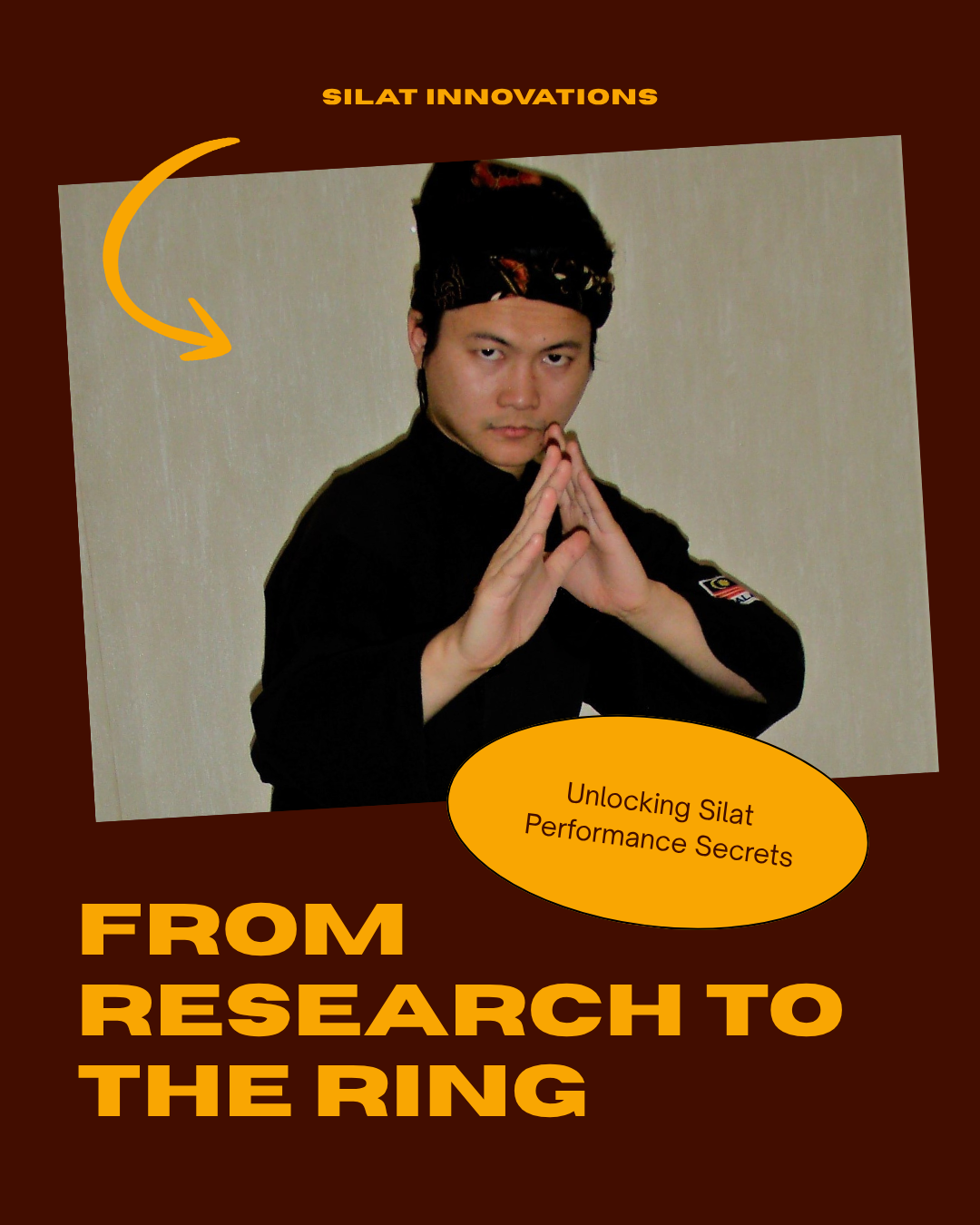
by
Assoc. Prof. Dr. Mohamad Nizam Mohamed Shapie
Leader, Combat Sports & Martial Arts Research Network (AIRBORNE)
Faculty of Sports Science & Recreation, Universiti Teknologi MARA (UiTM)
Name of Research:
Effect of Circuit Training on Fighting Performance of Young Silat Athletes – A Case Study
Citations:
Mohamed Shapie, M. N., Oliver, J., O’Donoghue, P., & Tong, R. (2018). Movement, Health & Exercise, 7(1), 27–41. https://doi.org/10.15282/mohe.v6i2.157
Purpose of the Study:
To examine how a 6-week silat-specific circuit training programme affects the fighting performance of young silat athletes aged 13 and 16, using a case study approach.
Key Findings:
- 13-year-olds (E13 & C13):
- Improved dodging and kicking actions post-training.
- Technical coaching had a stronger impact than physical conditioning.
- E13 showed increased dominance in post-training matches.
- 16-year-olds (E16 & C16):
- E16 increased kick frequency but had poor accuracy.
- C16 improved catching and toppling techniques.
- Tactical strategy influenced performance more than fitness gains.
- General Observations:
- Fitness improvements do not always translate directly to competition success.
- Tactical and technical training are critical, especially for older athletes.
- Individual responses vary significantly based on age, maturity, and training history.
Practical Implications:
- For Competitions:
- Circuit training can enhance specific physical attributes (e.g., endurance, strength).
- Younger athletes benefit more from fitness gains in actual matches.
- Tactical awareness and skill execution are decisive in older age groups.
- For Organizations (if not used for competition):
- Use findings to design age-specific training modules.
- Develop assessment tools for athlete readiness and skill transfer.
- Inform curriculum development for Silat Malaysia (SSM2050) and coaching certification.
- Support talent identification and long-term athlete development (LTAD) planning.
Tips for Application:
Athletes:
- Focus on mastering dodging and evasion techniques early.
- Understand your strengths and adapt tactics accordingly.
- Practice both upper and lower body techniques consistently.
Parents:
- Encourage participation in structured training programmes.
- Support technical skill development alongside physical fitness.
- Monitor progress not just in fitness but in match performance.
Coaches:
- Integrate circuit training with technical coaching.
- Use video analysis to track performance changes.
- Customize training based on age, maturity, and skill level.
- Emphasize tactical awareness and decision-making in matches.