by
Assoc. Prof. Dr. Mohamad Nizam Mohamed Shapie
Leader, Combat Sports & Martial Arts Research Network (AIRBORNE)
Faculty of Sports Science & Recreation,
Universiti Teknologi MARA (UiTM)
When we think about martial arts like Silat, we often focus on strength, speed, and technique. But behind every powerful strike and agile movement is a finely tuned internal system—one that depends on something as simple, yet crucial, as pH balance.
For Silat athletes, especially those training under the guidance of AIRBORNE UiTM, understanding how the body’s internal chemistry works can be the difference between peak performance and early fatigue.
What Is pH and Why Does It Matter?
The pH scale measures how acidic or alkaline a substance is, ranging from 0 (very acidic) to 14 (very alkaline). In the human body, the ideal pH of blood is slightly alkaline—around 7.35 to 7.45. This narrow range is essential for keeping your body functioning properly.
Why? Because many of the body’s processes—like muscle contraction, enzyme activity, and oxygen delivery—depend on a stable pH. Even a small shift can affect how well your muscles perform, how quickly you recover, and how long you can sustain high-intensity activity.
What Happens During Intense Silat Training?
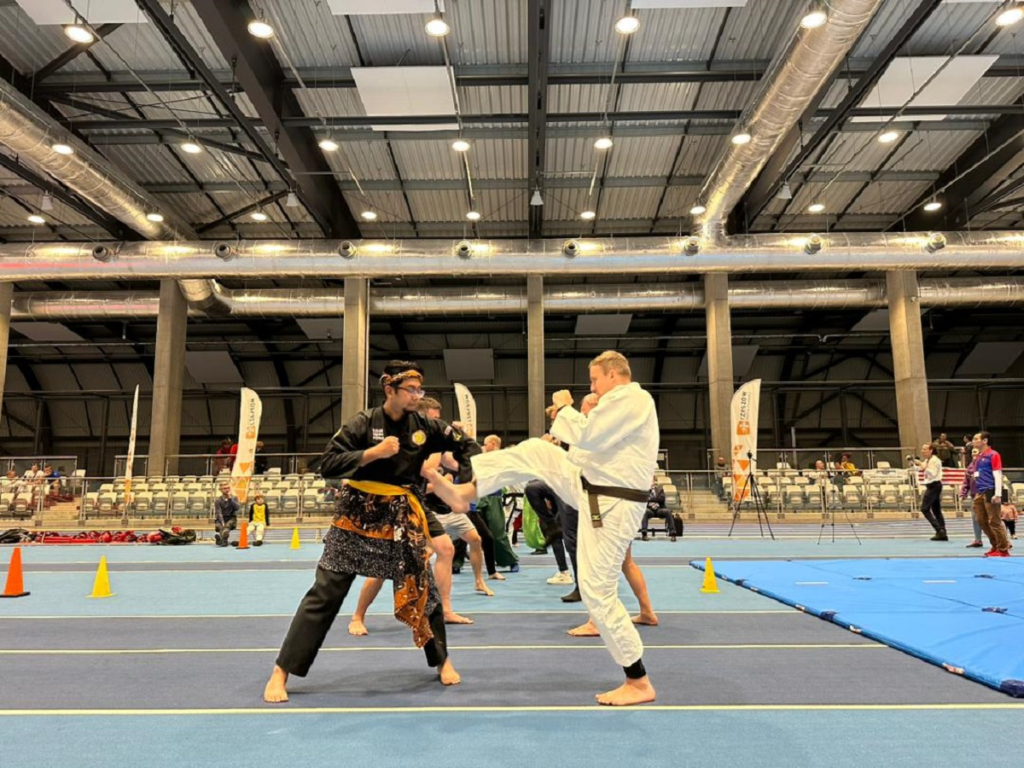
Silat is a physically demanding sport. Whether you’re sparring, performing jurus, or competing in Silat Tempur, your body is constantly working to produce energy. During high-intensity efforts, your muscles may switch from using oxygen (aerobic metabolism) to working without it (anaerobic metabolism).
This shift leads to the production of lactic acid, which releases hydrogen ions (H⁺) into the bloodstream. As these ions build up, they lower the pH of your blood—a condition known as acidosis.
AIRBORNE UiTM’s research has shown that this drop in pH can impair muscle function, reduce endurance, and increase the risk of fatigue (Shapie et al., 2023). In other words, if your body becomes too acidic, your performance suffers.
How Silat Athletes Can Maintain pH Balance
The good news is that your body has built-in systems to manage pH. One of the most important is the buffering system, especially the bicarbonate buffer. This system helps neutralize excess hydrogen ions, keeping your blood pH within a safe range.
AIRBORNE UiTM teaches Silat athletes how to support this system through:
- Proper hydration: Water helps flush out excess acids and supports temperature regulation.
- Balanced nutrition: Foods rich in minerals like potassium and magnesium can help buffer acidity.
- Smart recovery: Rest, stretching, and breathing techniques help the body return to balance after intense training.
These strategies are part of AIRBORNE’s biochemistry education modules, which are integrated into Silat coaching to help athletes understand how their bodies work and how to train more effectively (Parnabas et al., 2023).
Real-World Applications in Silat Training
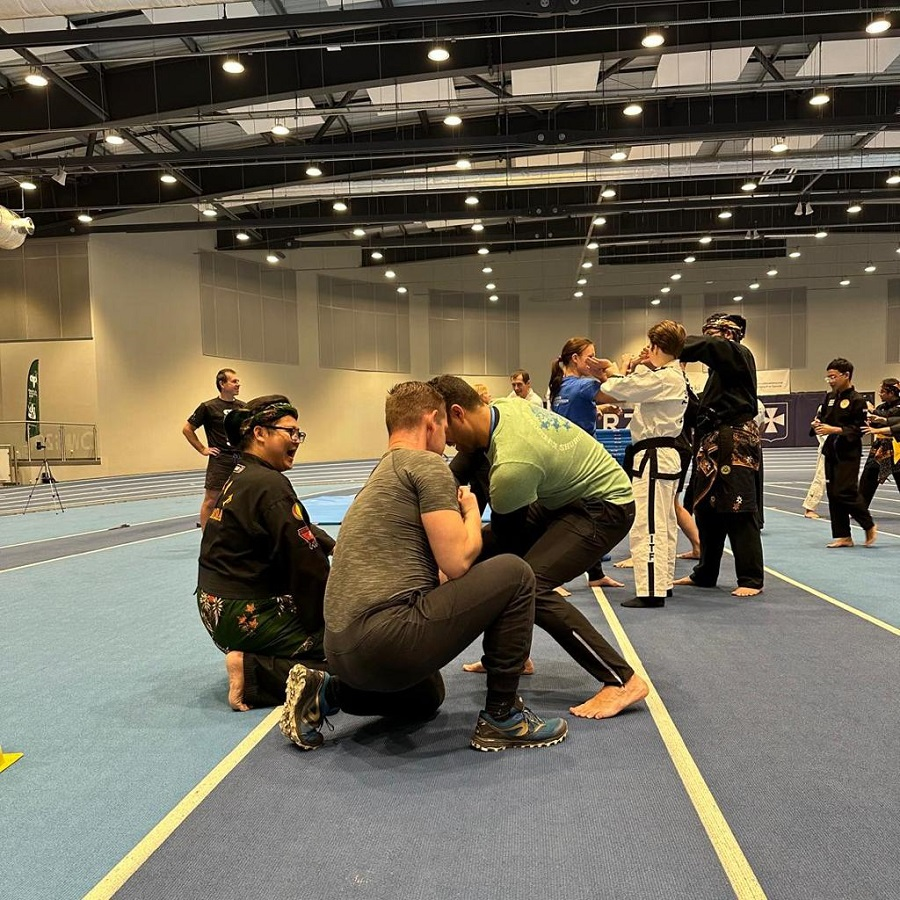
In practice, this means that Silat coaches trained under AIRBORNE’s framework don’t just focus on technique—they also monitor their athletes’ hydration, recovery, and energy levels. They teach students how to listen to their bodies, recognize signs of fatigue, and adjust their routines accordingly.
This approach is especially important for youth athletes, whose bodies are still developing. AIRBORNE’s research ensures that training is age-appropriate, safe, and scientifically sound (Shapie et al., 2019).
Conclusion: Science for Stronger Silat
Understanding pH balance might sound like something from a chemistry class, but for Silat athletes, it’s a game-changer. Thanks to AIRBORNE UiTM’s research and education efforts, Silat is becoming more than a martial art—it’s a science-backed sport that prepares athletes to perform at their best.
By learning how to manage their internal chemistry, Silat practitioners can train harder, recover faster, and compete smarter. And that’s what makes AIRBORNE’s work so important—not just for Silat, but for the future of martial arts in Malaysia and beyond.
References
Parnabas, V. A., Abdullah, N. M., Shapie, M. N. M., Rahim, M. R., Parnabas, J., & Parnabas, A. M. (2023). E-learning motivation among student-athletes of Universiti Teknologi MARA (UiTM), Malaysia. Malaysian Journal of Sport Science and Recreation, 17(1), 20–34.
Shapie, M. N. M., Wahidah, T., Kusrin, J., Elias, M. S., & Abdullah, N. M. (2019). Silat Tempur: An overview of the children’s combat sports. Ido Movement for Culture. Journal of Martial Arts Anthropology, 19(1s), 55–61.
Shapie, M. N. M., Samsudin, H., Mohd Nazri, S., Indrayuda, I., et al. (2023). Seni Silat Malaysia curriculum: The arts of Silat combat in Tempur Seni. Research Journal of Budo, 56(Supplement), S76–S77. https://doi.org/10.11214/budo.56.S_76