by
Assoc. Prof. Dr. Mohamad Nizam Mohamed Shapie
Faculty of Sports Science & Recreation, Universiti Teknologi MARA (UiTM)
Name of Research:
Current Status and Analysis of the Implementation of Wushu Teaching Models in Primary Education Stage
Citations:
Song, Y., & Shapie, M. N. M. (2024). Jurnal Sains Sukan & Pendidikan Jasmani, 13(Special Issue), 19–29. https://doi.org/10.37134/jsspj.vol13.sp.3.2024
Purpose of the Study:
To evaluate the current implementation of Wushu teaching in primary schools in Hebei Province, China, focusing on curriculum structure, student interest, teaching models, and educational outcomes.
Key Findings:
- Course Frequency:
- 50% of schools conduct Wushu classes 1–3 times weekly.
- Only 40% offer daily classes.
- 10% do not offer Wushu at all.
- Student Interest:
- 69% of students do not enjoy Wushu classes.
- Only 18% expressed strong interest.
- Teaching Models:
- 85% use “Basic Skills + Routines” model.
- Only 12% incorporate “Training with Fighting”.
- 3% use Wushu Ranking System.
- Teaching Objectives:
- Focus on movement quality (45%) and physical fitness (35%).
- Minimal emphasis on offensive/defensive techniques (5%) and Wushu morality (12%).
- Teaching Content:
- 96% focus on Wushu routines.
- Limited inclusion of Sanda (15%), Qigong (25%), and equipment (18%).
- Morality and Etiquette:
- Fist salute (100%) and cross-standing salute (80%) are common.
- Cultural elements like Wushu stories (5%) and music (8%) are rarely used.
- Teaching Methods:
- Explanation and demonstration (100%) dominate.
- Game teaching (80%) and scenario teaching (35%) are underutilized.
- Self-exploration (12%) is rare.
- Assessment & Evaluation:
- 65% use “Day-to-Day Performance + Routine Practice”.
- Only 5% use comprehensive evaluation including morality, combat, and routines.
- Teaching Aids:
- Foam mats (35%), punching targets (26%), gloves (25%) are common.
- Multimedia tools (10%) and helmets (6%) are underused.
Practical Implications for Silat:
Although the study focuses on Wushu, the findings are highly relevant to Silat, especially in the context of Silat Tempur and Silat education in schools:
1. Curriculum Design:
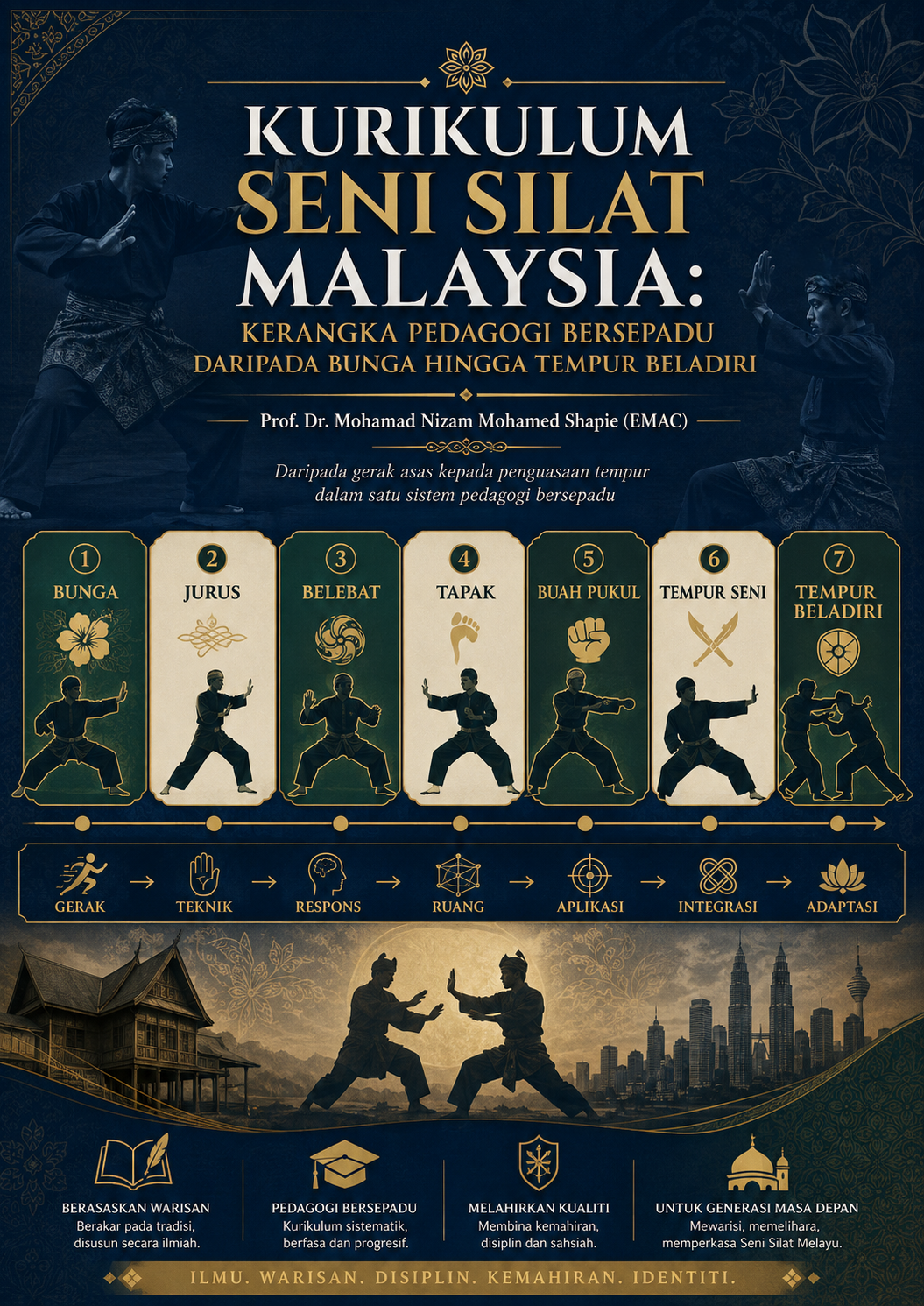
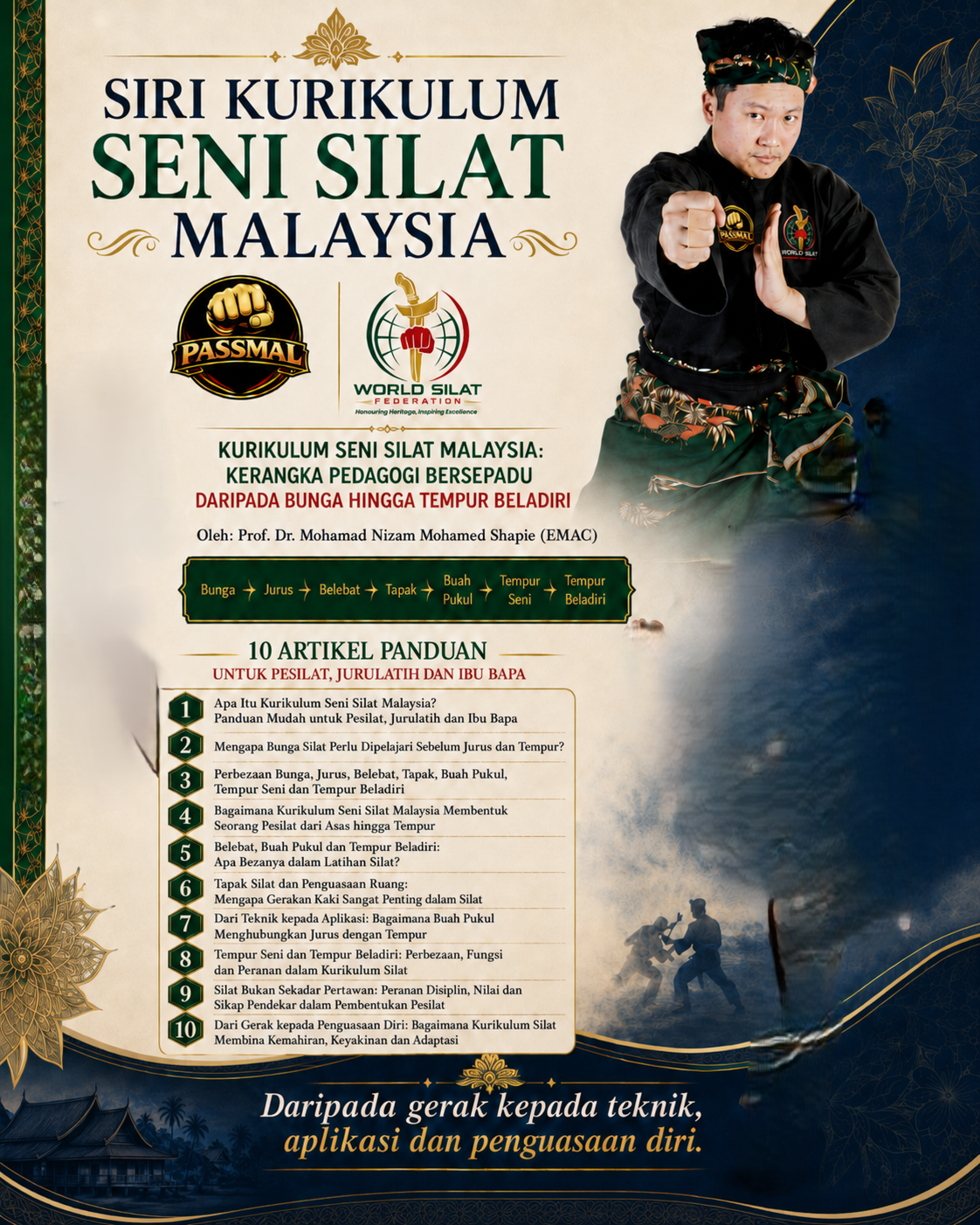
- Silat can adopt a more diversified teaching model, moving beyond “basic skills + routines” to include combat simulation, ranking systems, and moral education.
2. Student Engagement:
- Silat programmes should integrate interactive and fun elements such as games, storytelling, and multimedia to boost student interest and participation.
3. Teaching Objectives:
- Silat education should balance technical skill development with moral values, cultural heritage, and practical self-defense applications.
4. Assessment Systems:
- Develop comprehensive evaluation frameworks that assess not only technique but also character, discipline, and practical combat readiness.
5. Teaching Aids and Support:
- Invest in modern teaching tools (e.g., multimedia, foam weapons, sound systems) to enhance learning experiences and safety.
6. Policy Advocacy:
- Use this research as a benchmark to advocate for Silat inclusion in school curricula, supported by structured teaching models and national education policies.
Tips for Application:
Athletes:
- Engage in Silat programmes that offer interactive and culturally rich experiences.
- Focus on both physical and moral development.
Parents:
- Choose Silat schools that emphasize holistic education, including values, discipline, and cultural identity.
Coaches & Educators:
- Design age-appropriate, engaging, and culturally grounded Silat modules.
- Incorporate combat training, storytelling, and moral lessons into the curriculum.