by
Assoc. Prof. Dr. Mohamad Nizam Mohamed Shapie
Leader, Combat Sports & Martial Arts Research Network (AIRBORNE)
Faculty of Sports Science & Recreation,
Universiti Teknologi MARA (UiTM)
Research Paper:
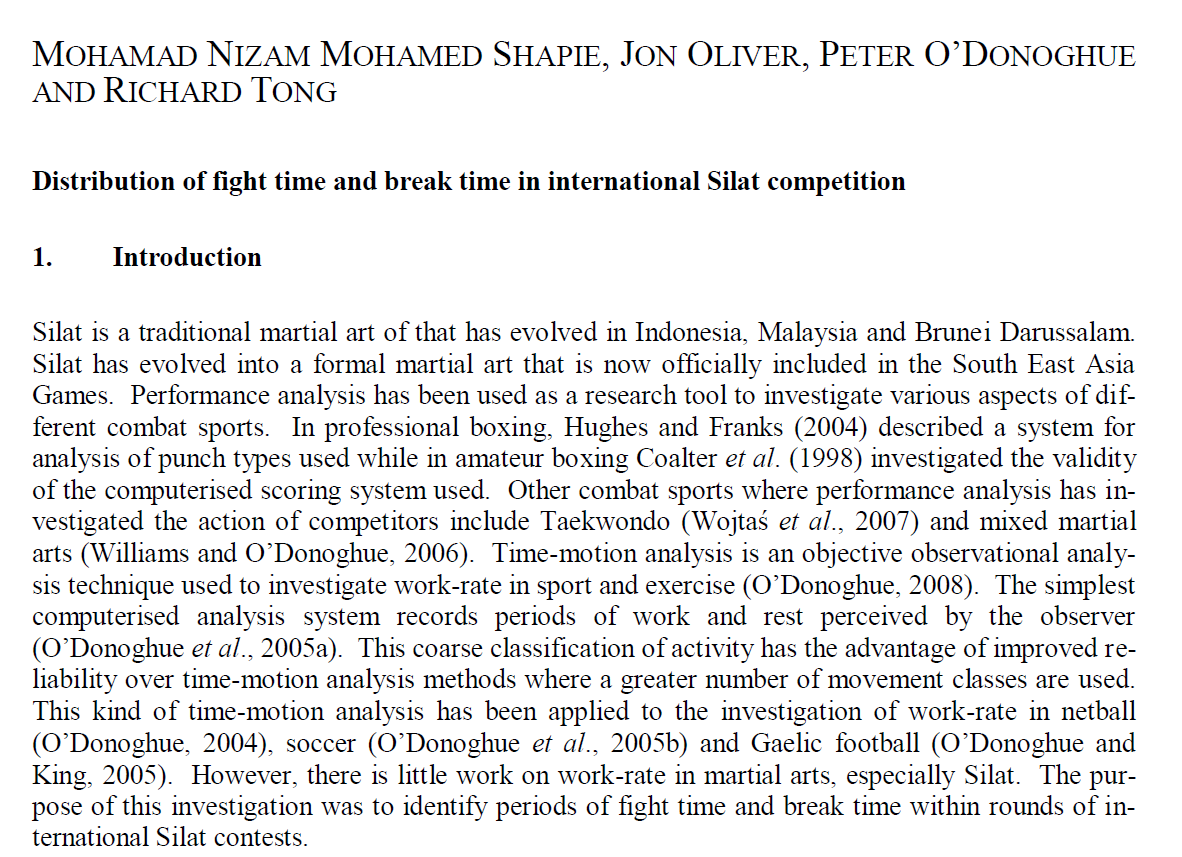
Distribution of Fight Time and Break Time in International Silat Competition
Citation:
Shapie, M.N.M., Oliver, J., O’Donoghue, P.G., & Tong, R. (2008). Distribution of fight time and break time in international Silat competition. In A. Hokelman & M. Brummond (Eds.), Performance Analysis of Sport VIII (pp. 667–672). Otto-von-Guericke-Universität Magdeburg, Germany.
What Can We Learn From How Silat Fighters Use Their Time in Matches?
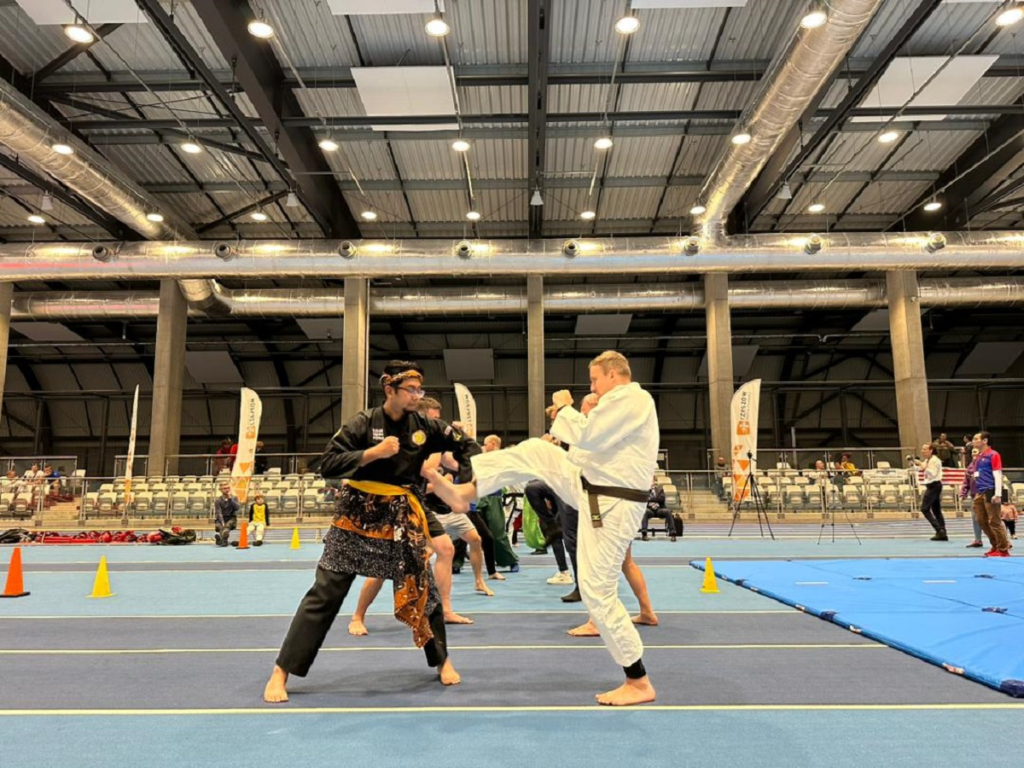
Silat may look like non-stop action, but research shows otherwise. In international matches, fighters spend only about 60% of the time actively fighting. The rest is made up of short breaks between bursts of action.
Each match lasts 6 minutes, split into three rounds. Fighters typically engage in 10–20 seconds of action, followed by 4–12 seconds of rest, repeating this cycle throughout the match.
Why Is This Important for Training?
Training should reflect the real rhythm of a match. Instead of long, continuous drills, fighters should train in short, intense bursts with brief recovery periods. For example:
🔁 15 seconds of fighting + 8 seconds of rest × 10 rounds
This method builds both anaerobic power (for fast, explosive moves) and aerobic endurance (for lasting through the match).
What About During Real Matches?
In competition, fighters don’t get full recovery. They must learn to:
✅ Recognize when to step back briefly
✅ Recover without appearing passive
✅ Stay sharp and conserve energy
Action durations vary widely—from 2 seconds to over 1 minute—so fighters must be ready for both quick exchanges and long battles.
How Can Coaches Improve Training?
Coaches can use video analysis tools to study:
🎯 Movement patterns
🎯 Footwork and timing
🎯 Attack and defense strategies
The study used the POWER system to track fight and rest times. Tools like this help coaches design training that matches real match demands.
Practical Tips for Everyone
For Fighters:
- Train in short bursts with short rests
- Build both speed and stamina
- Learn tactical recovery during matches
For Coaches:
- Use match data to plan realistic training
- Focus on timing, movement, and energy use
- Teach strategic pacing and recovery
For Parents:
- Understand that Silat is both physical and strategic
- Support training that builds endurance and focus
- Encourage smart recovery habits, not just hard fighting
Silat is not just about fighting hard—it’s about fighting smart.
This research shows how understanding match rhythm can help fighters stay strong, avoid fatigue, and perform better.
Stay tuned for more insights in this series starting 1 January 2025!