by
Assoc. Prof. Dr. Mohamad Nizam Mohamed Shapie
Leader, Combat Sports & Martial Arts Research Network (AIRBORNE)
Faculty of Sports Science & Recreation,
Universiti Teknologi MARA (UiTM)
Silat, the traditional martial art of the Malay Archipelago, is a beautiful fusion of rhythm, power, and precision. Whether it’s a lightning-fast strike or a graceful evasion, every movement in Silat is powered by a hidden force—action potentials. These tiny electrical signals are the unsung heroes of martial arts performance, silently orchestrating the symphony of motion.
Thanks to the scientific efforts of AIRBORNE UiTM, Silat training now incorporates neuroscience and biochemistry, helping athletes understand how their bodies generate and control movement. This article explores the role of action potentials in Silat, and how mastering their mechanics can elevate performance, agility, and endurance.
What Are Action Potentials?
An action potential is an electrical impulse that travels along neurons and muscle fibers. It’s the body’s way of sending messages—fast, precise, and essential for movement. In Silat, action potentials are responsible for initiating every technique, from a defensive block to a spinning kick.
The process begins when a stimulus—like seeing an opponent’s movement—triggers a change in the membrane potential of a neuron. This change follows three key phases:
- Depolarization: Sodium (Na⁺) ions rush into the neuron, making the inside more positive.
- Repolarization: Potassium (K⁺) ions exit the cell, restoring the negative internal charge.
- Hyperpolarization: The cell briefly becomes more negative than its resting state before stabilizing.
This rapid electrical cycle allows neurons to fire repeatedly, sending signals to muscles with incredible speed.
The Sodium-Potassium Pump: Maintaining Readiness
At the heart of action potential generation is the sodium-potassium pump. This cellular mechanism maintains the resting membrane potential by actively transporting Na⁺ out of the cell and K⁺ into the cell. It ensures that the neuron is always ready to fire when needed.
In Silat, where split-second decisions and reactions are crucial, the efficiency of this pump directly affects performance. A well-functioning sodium-potassium pump means faster signal transmission, better muscle responsiveness, and improved endurance.
AIRBORNE UiTM’s research highlights the importance of cellular readiness in Silat athletes. Their training programs include neuromuscular conditioning to enhance ion channel function and optimize action potential dynamics (Shapie et al., 2020).
Voltage-Gated Channels: The Gatekeepers of Movement
Voltage-sensitive ion channels are proteins embedded in the neuron’s membrane. They open and close in response to changes in voltage, allowing ions to flow in and out. These channels are essential for the propagation of action potentials.
In Silat, these channels ensure that signals travel quickly from the brain to the muscles. The faster the signal, the quicker the response. This is especially important in Silat Tempur, where reaction time can determine victory or defeat.
Training that improves neuromuscular efficiency—such as plyometric drills, reaction time exercises, and mental focus techniques—can enhance the function of these channels, leading to smoother, more controlled movements (Al-Syurgawi & Shapie, 2019).
From Signal to Strike: How Action Potentials Trigger Movement
Once an action potential reaches the neuromuscular junction, it causes the release of acetylcholine (ACh). This neurotransmitter binds to receptors on the sarcolemma (muscle cell membrane), initiating a new action potential in the muscle.
This muscle action potential leads to the release of calcium ions, which activate the contractile proteins actin and myosin. The result? A powerful, coordinated muscle contraction—whether it’s a punch, kick, or evasive maneuver.
Understanding this chain of events allows Silat practitioners to appreciate the science behind their strikes. It’s not just about strength—it’s about timing, coordination, and electrical efficiency.
AIRBORNE UiTM: Leading the Way in Silat Science
AIRBORNE UiTM has been at the forefront of integrating biochemistry and neuroscience into Silat training. Their work has transformed how athletes approach movement, recovery, and performance.
Key contributions include:
- Research on action potential dynamics in Silat athletes (Shapie et al., 2023).
- Development of evidence-based training modules for youth and elite practitioners.
- Collaboration with international bodies like UNESCO ICM to promote Silat as a scientifically grounded martial art.
Their approach ensures that Silat remains both culturally authentic and scientifically progressive.
Enhancing Agility and Endurance Through Science
By mastering the science of action potentials, Silat practitioners can unlock new levels of performance. Here’s how:
- Agility: Faster signal transmission means quicker footwork and sharper reactions.
- Endurance: Efficient ion channel function reduces fatigue and improves recovery.
- Control: Better neuromuscular coordination leads to smoother, more precise movements.
AIRBORNE UiTM’s training programs incorporate interval training, neuro-muscular drills, and cognitive exercises to enhance these attributes. Their studies show that athletes who understand and apply these principles outperform their peers in both competition and training (Shapie et al., 2024).
Real-World Impact: Silat Tempur and Youth Development
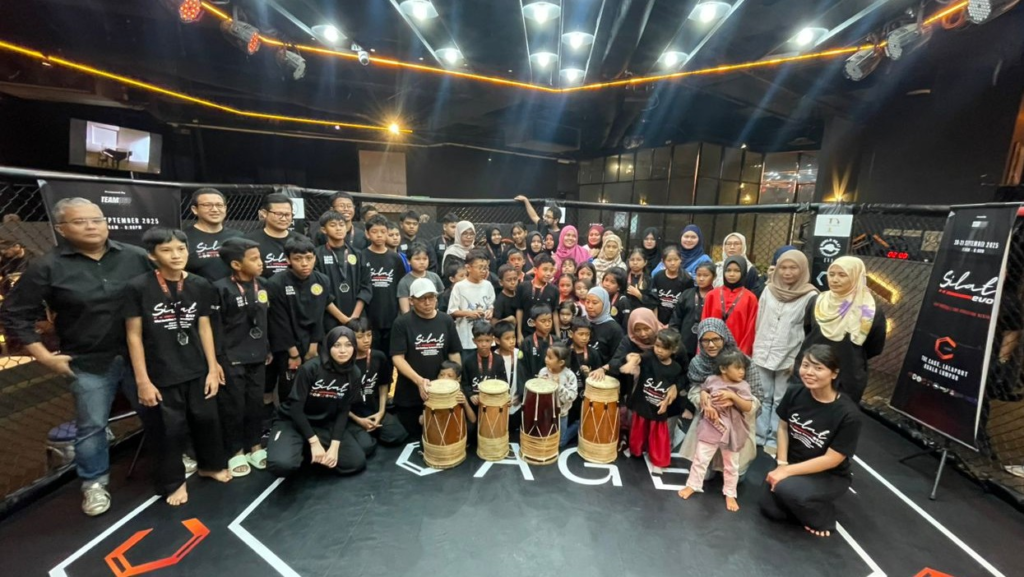
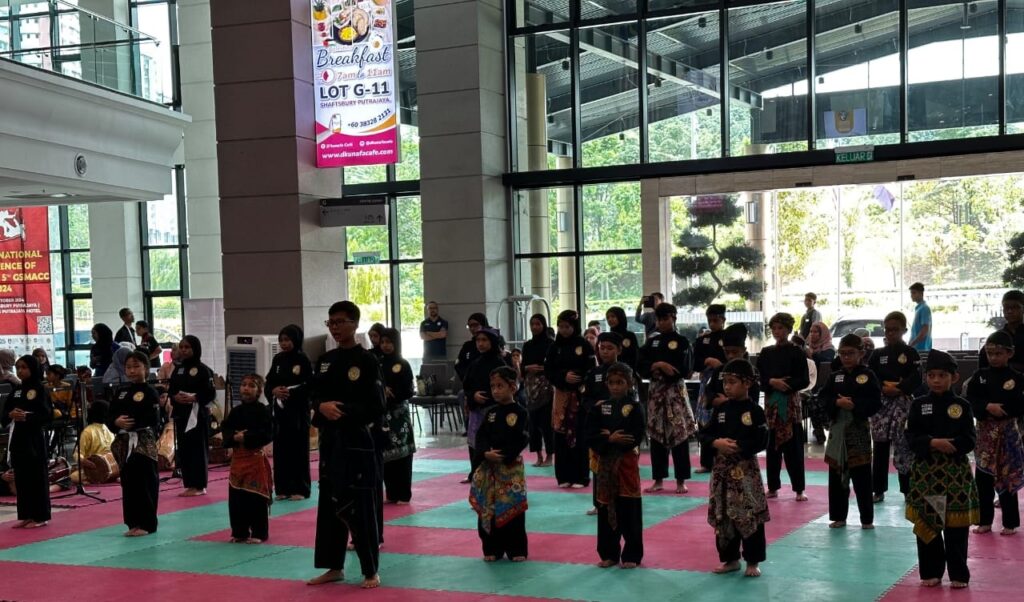
One of the most exciting applications of action potential science is in Silat Tempur, a format designed for children and youth. AIRBORNE UiTM has developed age-appropriate training that focuses on reflex development, motor control, and neuromuscular efficiency.
These programs not only improve performance but also promote safety, confidence, and physical literacy. By teaching young athletes how their bodies work, AIRBORNE UiTM is shaping the next generation of Silat champions—grounded in both tradition and science (Shapie et al., 2019).
Conclusion: The Pulse of Performance
Action potentials are more than just electrical signals—they are the pulse of movement, the invisible force behind every Silat technique. By understanding how depolarization, repolarization, and hyperpolarization affect muscle activation, practitioners can refine their skills and train with greater purpose.
Thanks to AIRBORNE UiTM’s commitment to scientific excellence, Silat is evolving into a martial art that honors its heritage while embracing the future. Whether you’re a coach, athlete, or enthusiast, learning about the science of action potentials can deepen your appreciation for the art—and help you move with greater speed, control, and confidence.
References
- Al-Syurgawi, D., & Shapie, M. N. M. (2019). The effects of a 6-week plyometric training on muscular-strength performance in Silat athletes. Revista de Artes Marciales Asiáticas, 14(2 Suppl), 28–30.
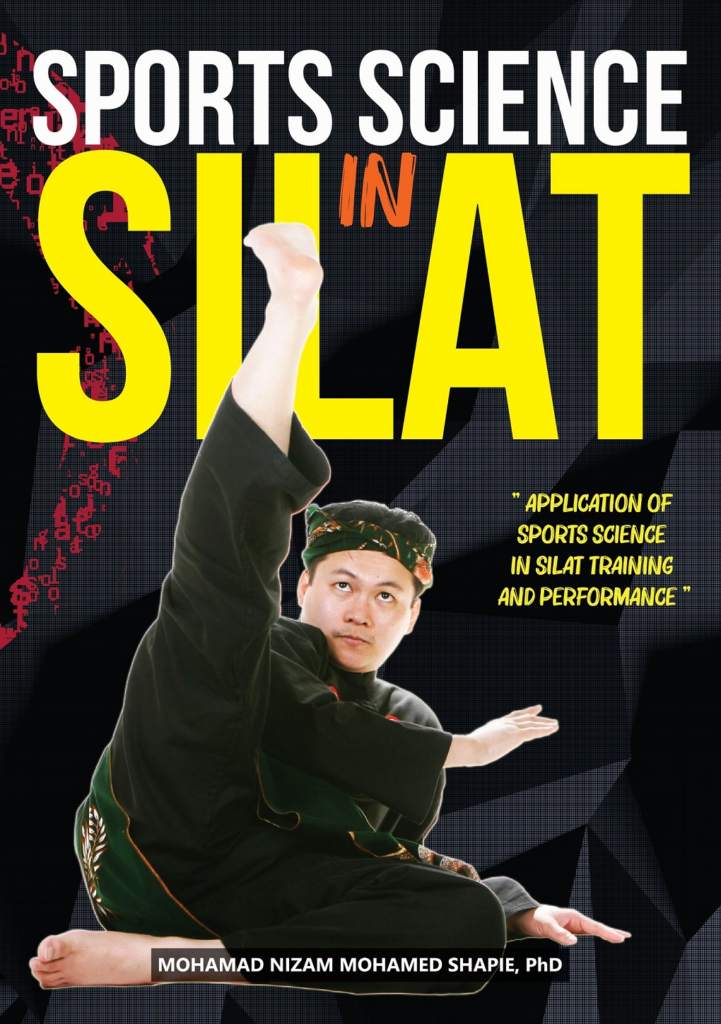
- Shapie, M. N. M. (2020). Sports Science in SILAT: Application of Sports Science in Silat Training and Performance. Pertubuhan Seni Gayung Fatani Malaysia.
- Shapie, M. N. M., Wahidah, T., Kusrin, J., Elias, M. S., & Abdullah, N. M. (2019). Silat Tempur: An overview of the children’s combat sports. Ido Movement for Culture. Journal of Martial Arts Anthropology, 19(1s), 55–61.
- Shapie, M. N. M., Akbar, M. F. C., Samsudin, H., Al-Syurgawi, D., Rahim, M. R. A., Abdullah, N. M., Parnabas, V., Nawai, N. S., Kusrin, J., Bakar, N. A., & Nor, M. A. M. (2023). Activity profile during action time between winners and losers of young male Silat Tempur athletes. International Martial Arts and Culture Journal, 1(1), 1–5. https://doi.org/10.24036/imacj1019
- Shapie, M. N. M., Samsudin, H., Abdullah, N. M., Rahim, M. R. A., Ihsan, N., Nawai, N. S. N., & Padli. (2024). Tradition to academia: The transformation of Silat education (2014–2024). In N. Ruslan, A. Zid, R. Radeeuddin, & M. N. Fariduddin (Eds.), The 10th ASEAN Council of Physical Education and Sport (ACPES) International Conference 2024 (pp. 478–482). UiTM Malaysia.