by
Assoc. Prof. Dr. Mohamad Nizam Mohamed Shapie
Leader, Combat Sports & Martial Arts Research Network (AIRBORNE)
Faculty of Sports Science & Recreation,
Universiti Teknologi MARA (UiTM)
Silat, the traditional martial art of the Malay Archipelago, is a captivating blend of fluidity, power, and cultural depth. Its graceful yet explosive movements are not just the result of years of disciplined practice—they are also deeply rooted in the biochemistry and physiology of the human body. Today, thanks to the efforts of institutions like AIRBORNE UiTM, Silat is undergoing a scientific renaissance, where tradition meets innovation.
This article explores how muscle contraction, nerve impulses, and neuromuscular coordination contribute to effective Silat performance. By understanding the biochemistry of movement, practitioners and coaches can optimize training, enhance performance, and reduce the risk of injury.
1. The Foundation of Movement: Muscle Contraction
Every Silat technique—be it a swift kick, a defensive block, or a fluid takedown—starts with muscle contraction. This process is powered by adenosine triphosphate (ATP), the molecule that fuels cellular activity.
When a Silat practitioner initiates movement, ATP enables the interaction between actin and myosin, two proteins within muscle fibers. These proteins slide past each other in a process known as the sliding filament theory, shortening the muscle and generating force. This is how a practitioner delivers a powerful strike or maintains balance during complex footwork.
However, ATP is not stored in abundance. It must be constantly regenerated through metabolic pathways like glycolysis, the Krebs cycle, and oxidative phosphorylation. The efficiency of these systems directly influences an athlete’s endurance, strength, and recovery—especially during high-intensity bouts.
As highlighted by Shapie et al. (2020), understanding these energy systems allows coaches to tailor training programs that enhance performance while minimizing fatigue and injury.
2. The Role of the Nervous System: Action Potentials and Signal Transmission
Muscle contraction doesn’t happen in isolation—it’s initiated by the nervous system. When a Silat exponent decides to move, the brain sends an action potential—an electrical signal—down a motor neuron to the target muscle.
At the neuromuscular junction, this signal triggers the release of acetylcholine (ACh), a neurotransmitter that binds to receptors on the muscle cell membrane. This interaction causes the release of calcium ions (Ca²⁺) from the sarcoplasmic reticulum, setting off the chain reaction that leads to muscle contraction.
This process is not just fascinating—it’s essential. Without the precise timing of these signals, Silat movements would lack the speed and accuracy needed in combat. AIRBORNE UiTM’s integration of neuroscience into Silat training helps athletes understand and refine these mechanisms (Shapie, 2020).
3. Calcium Ions: The Spark of Movement
Calcium ions are the unsung heroes of muscle contraction. Once released into the muscle cell, they bind to troponin, which shifts tropomyosin and exposes binding sites on actin. This allows myosin to latch on and pull—creating movement.
In Silat, where timing is everything, the rapid release and reuptake of calcium ensures that techniques are executed with precision. Whether performing a jurus or engaging in Silat Tempur, efficient calcium cycling is vital for repeated, high-speed actions.
As noted by Al-Syurgawi & Shapie (2019), training that enhances calcium handling can improve muscular strength and agility—key attributes in competitive Silat.
4. Neuromuscular Coordination: Precision in Practice
Silat is not just about brute strength—it’s about control, timing, and fluidity. These qualities are governed by neuromuscular coordination, which refers to the ability of the nervous system to activate the right muscles at the right time.
This coordination involves:
- Motor unit recruitment: Engaging specific muscle fibers for movement.
- Proprioception: Sensing body position and movement.
- Reflex pathways: Automatic responses that protect the body and enhance reaction time.
AIRBORNE UiTM’s research shows that training programs focusing on motor control, balance, and reaction drills significantly improve neuromuscular coordination. This leads to more efficient movements, better technique execution, and reduced injury risk (Shapie et al., 2023).
5. Energy Systems and Silat Performance
Silat is a sport of bursts and recovery. A match may involve explosive strikes followed by strategic pauses. To meet these demands, the body relies on three energy systems:
- ATP-PC System: Provides immediate energy for short, powerful movements.
- Anaerobic Glycolysis: Fuels sustained high-intensity efforts.
- Aerobic System: Supports prolonged activity and recovery.
Training that targets these systems—such as interval training, resistance workouts, and aerobic conditioning—can enhance an athlete’s ability to perform under pressure and recover quickly (Abdullah et al., 2020).
6. Scientific Training: Smarter, Safer, Stronger
The integration of biochemistry into Silat training is not just theoretical—it has real-world benefits. AIRBORNE UiTM’s evidence-based approach uses scientific principles to guide everything from warm-ups to recovery.
Benefits include:
- Injury prevention: Understanding muscle fatigue and joint stress helps reduce overtraining.
- Performance optimization: Tailored programs improve strength, speed, and endurance.
- Recovery enhancement: Nutritional and physiological strategies support healing.
- Long-term athlete development: Monitoring biomarkers ensures sustainable progress.
This approach is especially valuable for youth athletes, where proper technique and safe habits can shape lifelong performance (Shapie et al., 2019).
7. Bridging Tradition and Science
Silat is more than a sport—it’s a cultural legacy. Integrating scientific knowledge into its pedagogy doesn’t dilute its essence; it strengthens it. By understanding the science of movement, practitioners gain deeper insight into their bodies, enabling them to train with purpose and precision.
AIRBORNE UiTM exemplifies this synergy. Through collaborations with sports scientists, physiologists, and martial arts experts, they’ve created a model where tradition meets innovation. This model is now being adopted in coaching certifications, athlete development programs, and academic research across Malaysia and beyond (Shapie et al., 2024).
Conclusion: The Future of Silat Training
As Silat continues to evolve on the global stage, the role of biochemistry and neuromuscular science will become increasingly vital. From ATP production to calcium signaling, from nerve impulses to motor coordination, every Silat movement is a testament to the complexity and beauty of the human body.
Thanks to institutions like AIRBORNE UiTM, Silat practitioners are now equipped with the tools to train smarter, safer, and stronger. By embracing science, Silat not only preserves its heritage but also secures its future as a modern, respected martial art.
References
- Abdullah, N. M., Isaik, M. A., Abdul Rahim, M. R., Shapie, M. N. M., Parnabas, V., & Tumijan, W. (2020). Comparison of physical fitness between Taekwondo and Silat athletes. In M. N. M. Shapie, A. Md. Nadzalan, S. J. Md. Japilus & M. S. Ramli (Eds.), IMACSSS: International Martial Arts and Combat Sports Scientific Society (p. 71). Shah Alam, Selangor: Pertubuhan Seni Gayung Fatani Malaysia.
- Al-Syurgawi, D., & Shapie, M. N. M. (2019). The effects of a 6-week plyometric training on muscular-strength performance in Silat athletes. Revista de Artes Marciales Asiáticas, 14(2 Suppl), 28–30.
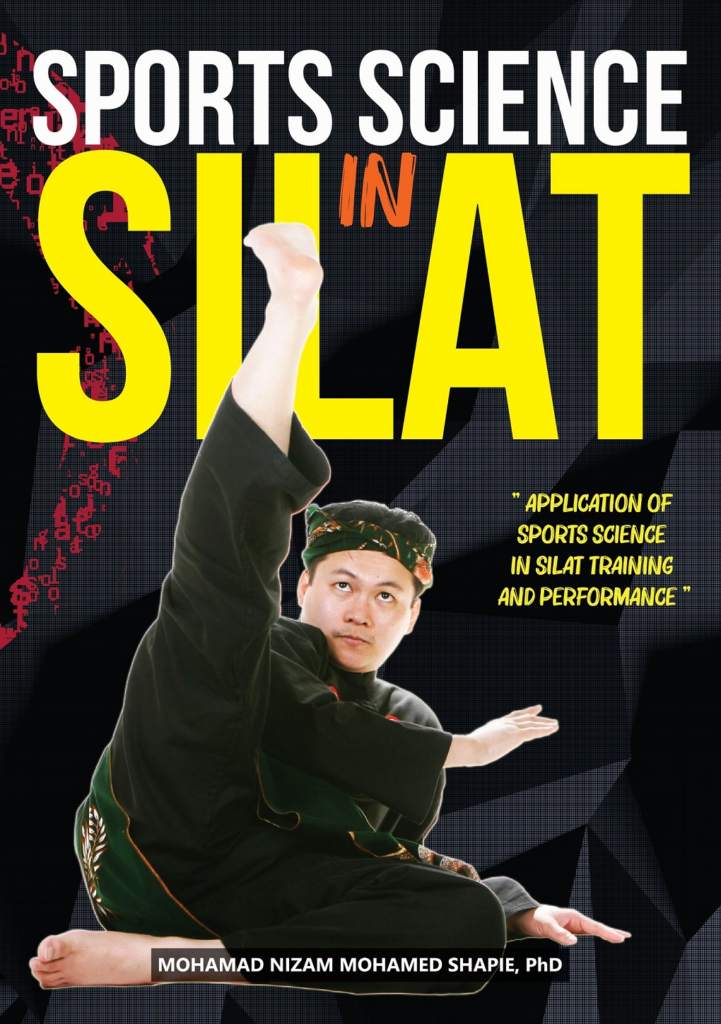
- Shapie, M. N. M. (2020). Sports Science in SILAT: Application of Sports Science in Silat Training and Performance. Pertubuhan Seni Gayung Fatani Malaysia.
- Shapie, M. N. M., Wahidah, T., Kusrin, J., Elias, M. S., & Abdullah, N. M. (2019). Silat Tempur: An overview of the children’s combat sports. Ido Movement for Culture. Journal of Martial Arts Anthropology, 19(1s), 55–61.
- Shapie, M. N. M., Samsudin, H., Abdullah, N. M., Rahim, M. R. A., Ihsan, N., Nawai, N. S. N., & Padli. (2024). Tradition to academia: The transformation of Silat education (2014–2024). In N. Ruslan, A. Zid, R. Radeeuddin, & M. N. Fariduddin (Eds.), The 10th ASEAN Council of Physical Education and Sport (ACPES) International Conference 2024 (pp. 478–482). UiTM Malaysia.
- Shapie, M. N. M., Akbar, M. F. C., Samsudin, H., Al-Syurgawi, D., Rahim, M. R. A., Abdullah, N. M., Parnabas, V., Nawai, N. S., Kusrin, J., Bakar, N. A., & Nor, M. A. M. (2023). Activity profile during action time between winners and losers of young male Silat Tempur athletes. International Martial Arts and Culture Journal, 1(1), 1–5. https://doi.org/10.24036/imacj1019