by
Assoc. Prof. Dr. Mohamad Nizam Mohamed Shapie
Leader, Combat Sports & Martial Arts Research Network (AIRBORNE)
Faculty of Sports Science & Recreation,
Universiti Teknologi MARA (UiTM)
Water is often called the essence of life—and for Silat athletes, it’s also the essence of performance. Whether you’re a beginner learning your first Bunga Silat steps or a seasoned competitor preparing for a match, staying hydrated is one of the most important things you can do for your body.
At AIRBORNE UiTM, the science of hydration is taken seriously. As part of its mission to modernize Silat through research and innovation, AIRBORNE integrates biochemistry and sports science into Silat training. This ensures that athletes not only move with precision but also understand how their bodies function at a cellular level.
Why Water Matters in Silat
Did you know that water makes up about 60% of your body weight? It’s found in every cell, tissue, and organ, playing a vital role in everything from regulating temperature to transporting nutrients and removing waste.
During Silat training—especially in high-intensity formats like Silat Tempur or Silat EVO—your body generates heat, loses fluids through sweat, and burns energy rapidly. Without enough water, your muscles can cramp, your focus can fade, and your risk of injury increases.
AIRBORNE UiTM’s research highlights how water supports cellular respiration, the process by which your body produces ATP (adenosine triphosphate)—the energy source that powers every punch, kick, and movement (Shapie et al., 2023). Without proper hydration, this energy system becomes less efficient, leading to fatigue and slower recovery.
Hydration Before, During, and After Training
AIRBORNE encourages athletes to think of hydration as a three-phase process:
- Before training: Drinking water before a session helps prepare your body for physical exertion. It ensures your muscles are well-hydrated and ready to perform.
- During training: Sipping water throughout practice helps regulate body temperature and replace fluids lost through sweat.
- After training: Rehydrating post-workout is essential for muscle recovery and preventing cramps or dizziness.
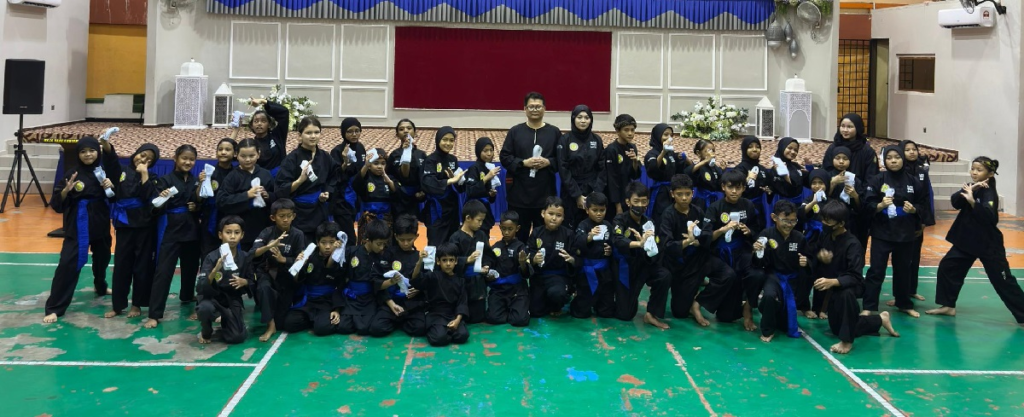
This approach is especially important for young athletes, whose bodies are still developing and more vulnerable to dehydration. AIRBORNE’s child-focused programs, like Silat Tempur, are designed with these needs in mind (Shapie et al., 2019).
Water and Temperature Control
One of water’s most amazing properties is its ability to absorb heat without drastic temperature changes. This is crucial during Silat training, where body heat can rise quickly due to intense movement.
When you sweat, your body uses water to cool down. But if you don’t replace that lost fluid, your body can overheat, leading to fatigue or even heat-related illnesses. AIRBORNE’s biochemistry modules teach athletes how to recognize signs of dehydration and how to manage their fluid intake effectively (Parnabas et al., 2023).
Science Meets Tradition
Silat is a martial art rich in tradition, but AIRBORNE UiTM is proving that tradition and science can go hand in hand. By incorporating exercise biochemistry into coaching, AIRBORNE is helping athletes understand the “why” behind their training.
For example, students learn how water helps transport oxygen and nutrients to muscles, how it supports joint lubrication, and how it aids in removing lactic acid buildup after intense drills. These lessons are not just theoretical—they’re practical tools that help athletes train smarter and recover faster.
A Holistic Approach to Athlete Wellness
AIRBORNE’s philosophy is holistic. It’s not just about winning medals—it’s about developing well-rounded individuals who are strong in body, mind, and spirit. Hydration is a key part of this equation.
By teaching athletes to care for their bodies through proper hydration, AIRBORNE is also promoting long-term health and wellness. This is especially important for youth, who are forming habits that will last a lifetime.
AIRBORNE’s research has even shown that proper hydration can improve mental focus, reaction time, and emotional regulation—all of which are essential in a sport like Silat that requires both physical and mental discipline (Abdul Rahim et al., 2020).
Conclusion: Drink to Perform
Water might seem simple, but its impact on performance is profound. For Silat athletes, staying hydrated is not just a health tip—it’s a performance strategy.
Thanks to AIRBORNE UiTM’s scientific approach, Silat training now includes education on hydration, recovery, and biochemistry. This ensures that athletes are not only skilled in technique but also equipped with the knowledge to take care of their bodies.
So the next time you step into the gelanggang, remember: your water bottle is just as important as your samping.
References
Abdul Rahim, M. R., Shapie, M. N. M., Abdullah, N. M., & Parnabas, V. (2020). Effects of Silat practice on psychological profiles among young tennis players. In M. N. M. Shapie, A. Md. Nadzalan, S. J. Md. Japilus, & M. S. Ramli (Eds.), IMACSSS: International Martial Arts and Combat Sports Scientific Society (p. 59). Shah Alam, Selangor: Pertubuhan Seni Gayung Fatani Malaysia.
Parnabas, V. A., Abdullah, N. M., Shapie, M. N. M., Rahim, M. R., Parnabas, J., & Parnabas, A. M. (2023). E-learning motivation among student-athletes of Universiti Teknologi MARA (UiTM), Malaysia. Malaysian Journal of Sport Science and Recreation, 17(1), 20–34.
Shapie, M. N. M., Wahidah, T., Kusrin, J., Elias, M. S., & Abdullah, N. M. (2019). Silat Tempur: An overview of the children’s combat sports. Ido Movement for Culture. Journal of Martial Arts Anthropology, 19(1s), 55–61.
Shapie, M. N. M., Samsudin, H., Mohd Nazri, S., Indrayuda, I., et al. (2023). Seni Silat Malaysia curriculum: The arts of Silat combat in Tempur Seni. Research Journal of Budo, 56(Supplement), S76–S77. https://doi.org/10.11214/budo.56.S_76