by
Assoc. Prof. Dr. Mohamad Nizam Mohamed Shapie & Mohamad Rahizam Abdul Rahim
Leader, Combat Sports & Martial Arts Research Network (AIRBORNE)
Faculty of Sports Science & Recreation, Universiti Teknologi MARA (UiTM)
Name of Research:
Effects of Cross-Training Using Silat Practice on Psychological Profiles of Young Tennis Players
Citations:
Rahim, M. R. A., Shapie, M. N. M., Abdullah, N. M., Parnabas, V., & Mohd Nor, M. A. (2022). IDO Movement for Culture. Journal of Martial Arts Anthropology, 22(2S), 37–45. DOI: 10.14589/ido.22.2S.5
Purpose of the Study:
To investigate the effectiveness of Silat practice as a cross-training intervention in enhancing the psychological attributes of nationally ranked junior tennis players in Malaysia.
Key Findings:
- Participants:
- 30 junior tennis players (aged 12–16), divided into experimental and control groups.
- Experimental group performed 30 minutes of Silat practice before regular tennis training for 8 weeks.
- Psychological Attributes Measured:
- Self-confidence
- Negative energy control
- Attention control
- Visualization and imagery control
- Motivation level
- Positive energy
- Attitude control
- Results:
- Significant improvements in all psychological attributes except negative energy in the experimental group.
- Notable increases in self-confidence, attention control, motivation, and attitude control.
- Silat practice enhanced mental toughness and psychological readiness for competition.
Practical Implications for Silat:
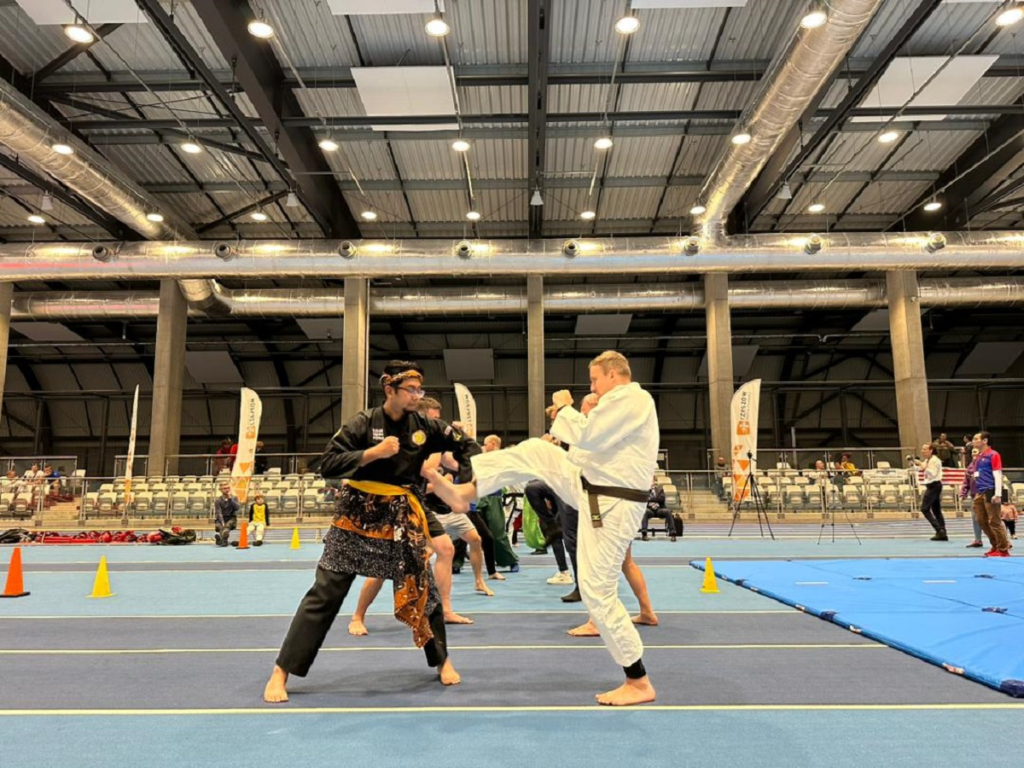
This study demonstrates that Silat is not only a martial art but also a powerful tool for psychological conditioning. Its structured drills and philosophical teachings can be integrated into cross-training programmes for athletes in other sports to enhance mental resilience.
- Silat practice improves focus, motivation, and emotional control, which are critical for high-pressure sports like tennis.
- The mental toughness framework in Silat aligns with elite sports psychology principles.
- Silat can be used as a dynamic warm-up or mental conditioning module in multi-sport training environments.
Tips for Application:
Athletes:
- Use Silat drills to develop mental focus and emotional regulation.
- Apply Silat principles such as discipline and strategic thinking to other sports.
Parents:
- Encourage children to explore Silat as a complementary activity to enhance psychological strength.
- Support cross-training approaches that build character and mental resilience.
Coaches:
- Incorporate Silat-based warm-ups and mental drills into training routines.
- Use Silat to break training monotony and improve athlete engagement and motivation.
- Monitor psychological progress using tools like the Psychological Performance Inventory (PPI).