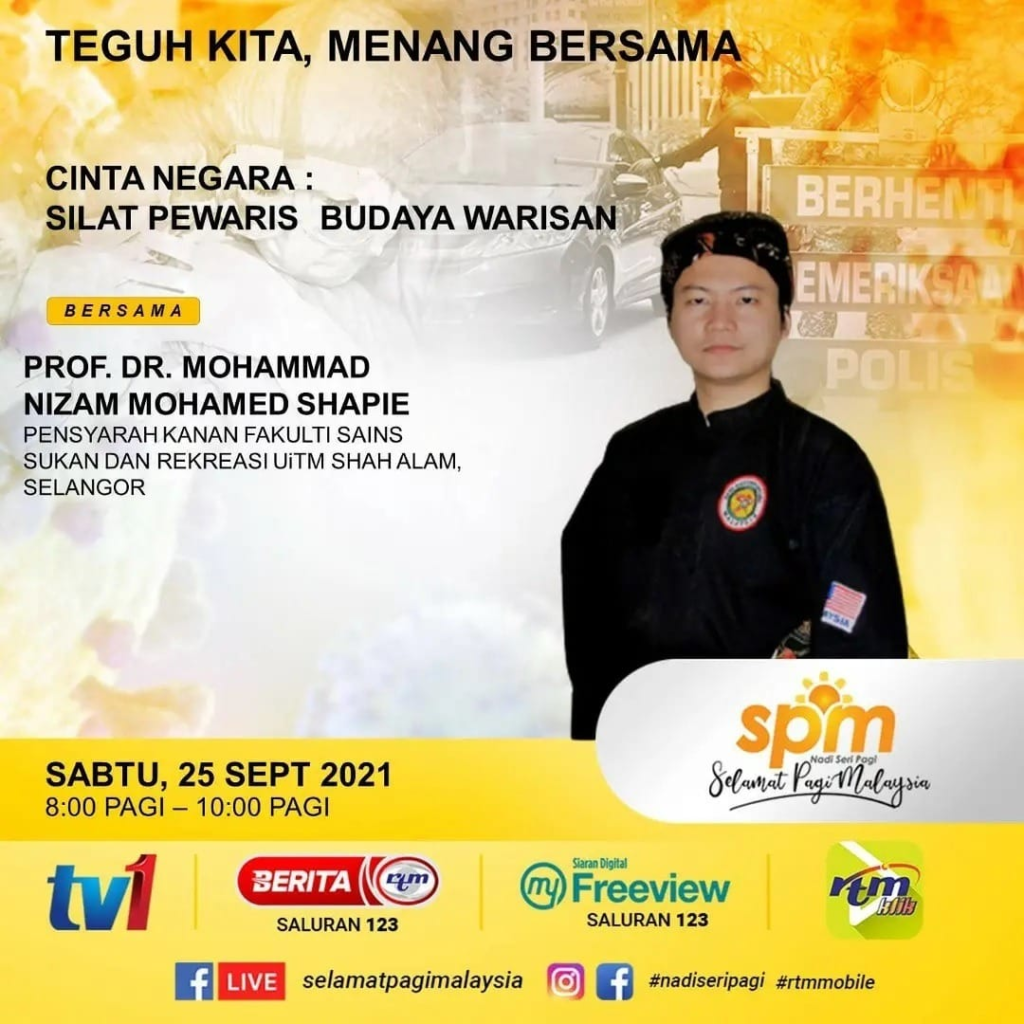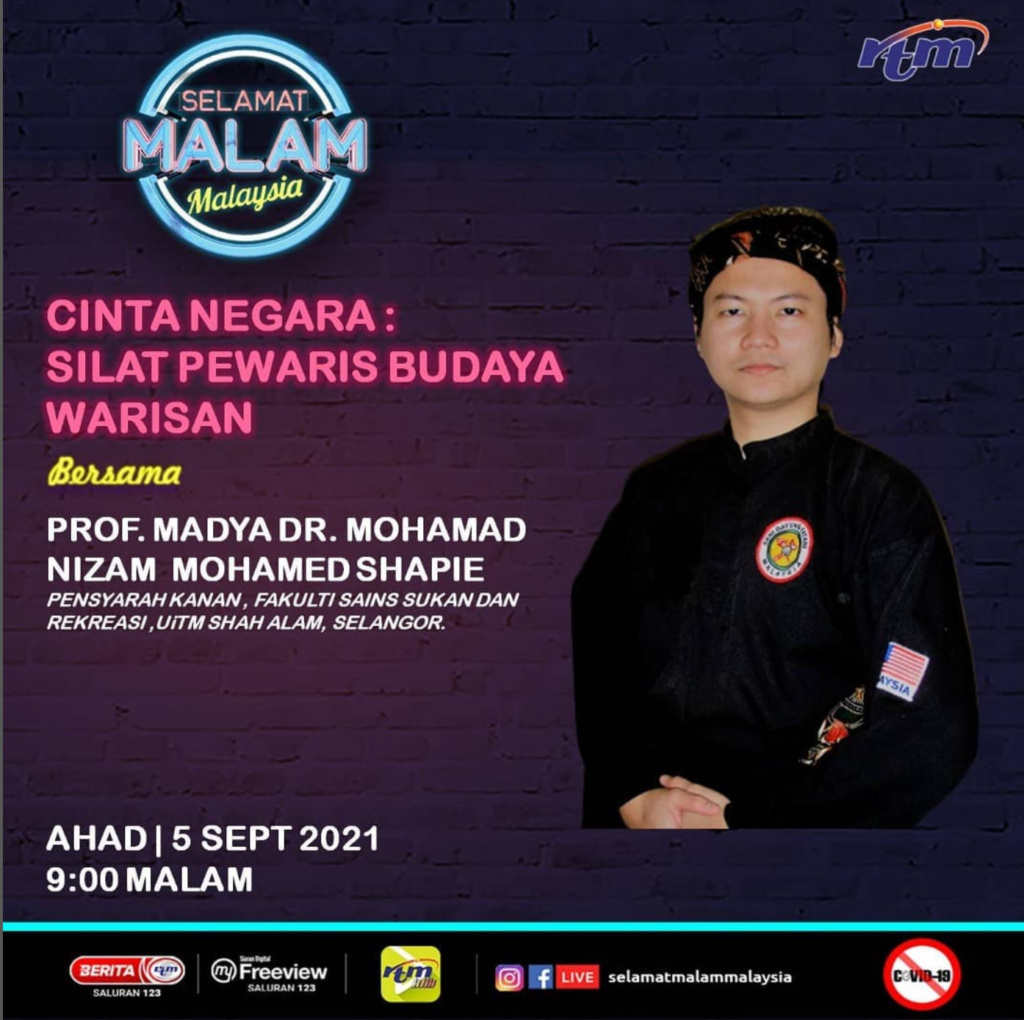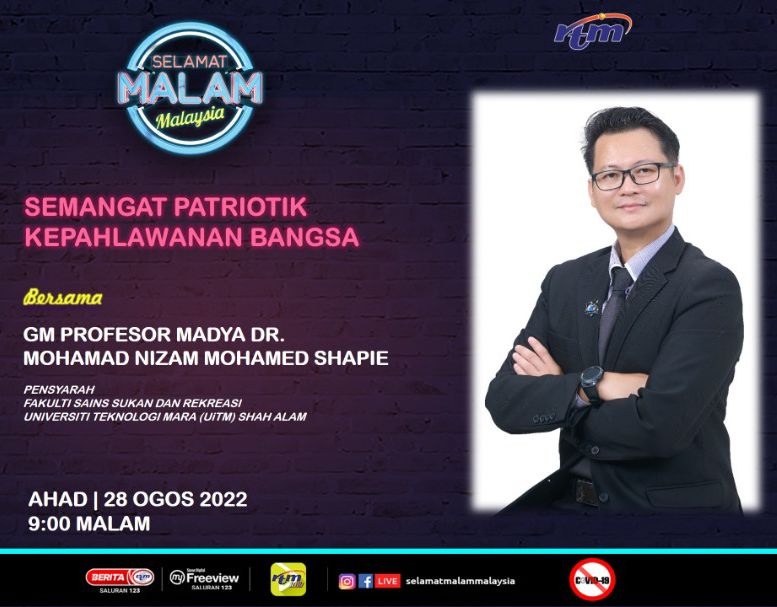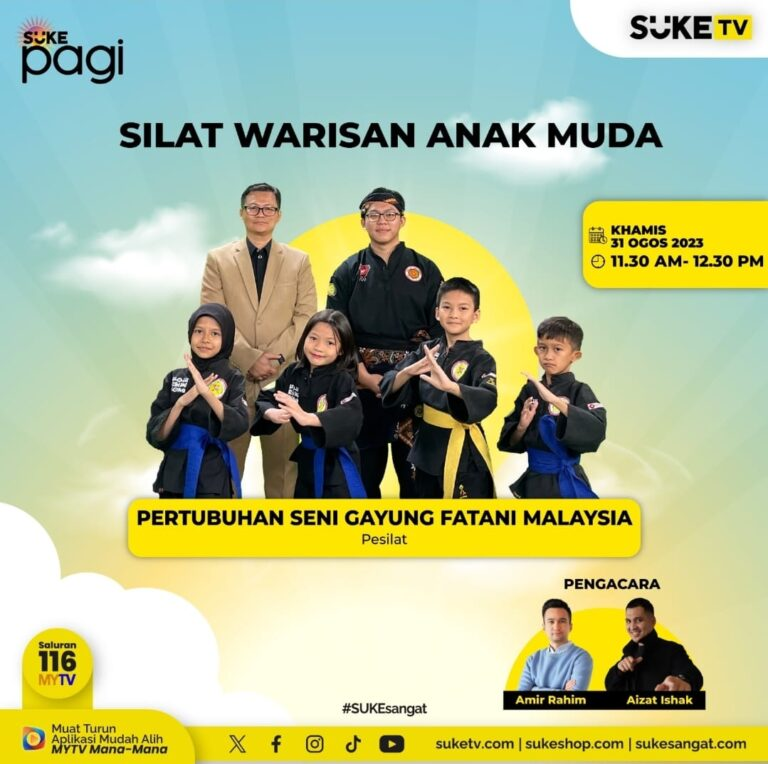
Assoc. Prof. Dr. Mohamad Nizam Mohamed Shapie
Leader, Combat Sports & Martial Arts Research Network (AIRBORNE)
Faculty of Sports Science & Recreation,
Universiti Teknologi MARA (UiTM)
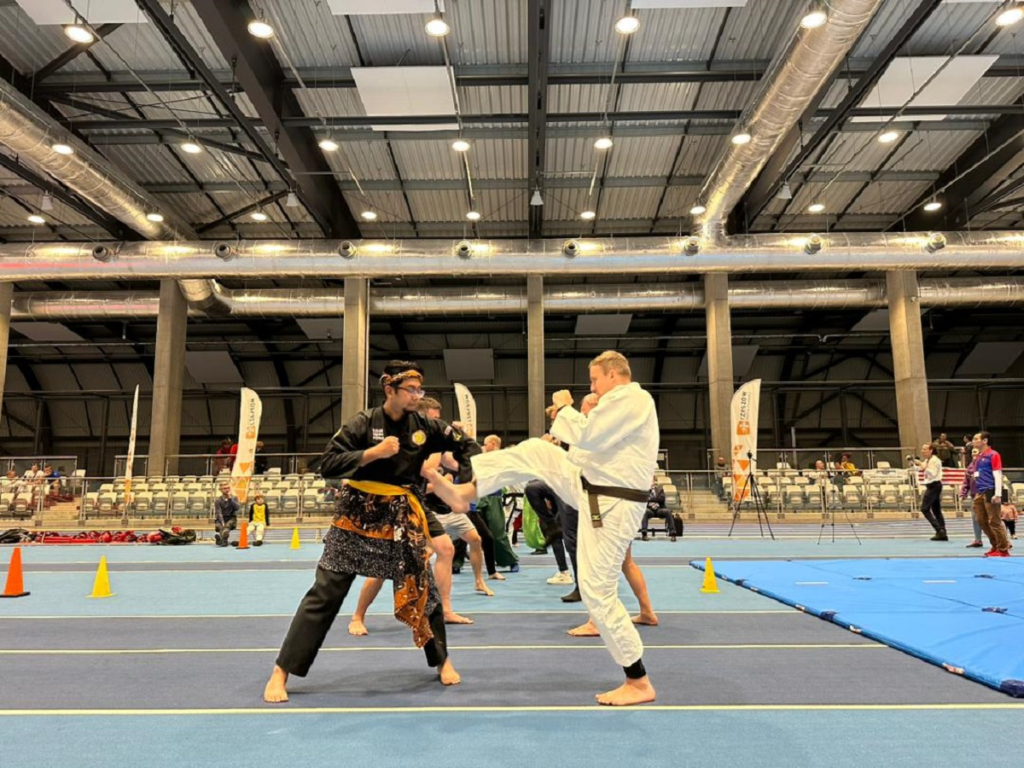
Silat, the traditional martial art of the Malay world, is not confined to Malaysia alone. Its influence stretches across Southeast Asia—from Sumatra to Mindanao, Pattani to Brunei—where it has evolved through local dialects and customs while retaining its core identity. Terms like silek, gayuang, pencak, and kali reflect this linguistic and cultural diversity (Anuar, 2008; Shapie & Elias, 2016a).
Despite regional variations, Silat remains a unifying force among Malay communities. It carries shared values of honor, resilience, and cultural pride. In Sumatra, Silat is known as silek, practiced with deep spiritual and philosophical undertones. In Mindanao, kali represents the Filipino adaptation of Silat, blending indigenous techniques with Malay martial wisdom. In Pattani and Brunei, Silat remains a symbol of identity and resistance, particularly among communities preserving their heritage in the face of modern challenges (Shapie, 2021).
PASSMAL’s outreach through the World Silat Federation (WSF) plays a pivotal role in strengthening these transnational bonds. By promoting Silat as a global heritage, WSF fosters collaboration among Silat schools, researchers, and cultural institutions across borders. This effort not only preserves the authenticity of Silat Melayu but also elevates its status on the international stage (Shapie et al., 2022).
The adaptability of Silat is a testament to its depth and complexity. While the techniques may differ—some emphasizing strikes, others grappling or weaponry—the philosophical core remains intact. Silat teaches discipline, humility, and spiritual awareness. It is not merely a combat system but a way of life, deeply intertwined with local customs, music, and rituals (Anuar, 2002; Shapie et al., 2024).
In academic and cultural forums, Silat is increasingly recognized as a valuable intangible heritage. UNESCO’s acknowledgment of Silat as a cultural treasure (Poon, 2021) underscores its significance beyond sport. It is a living tradition that connects communities across oceans and generations.
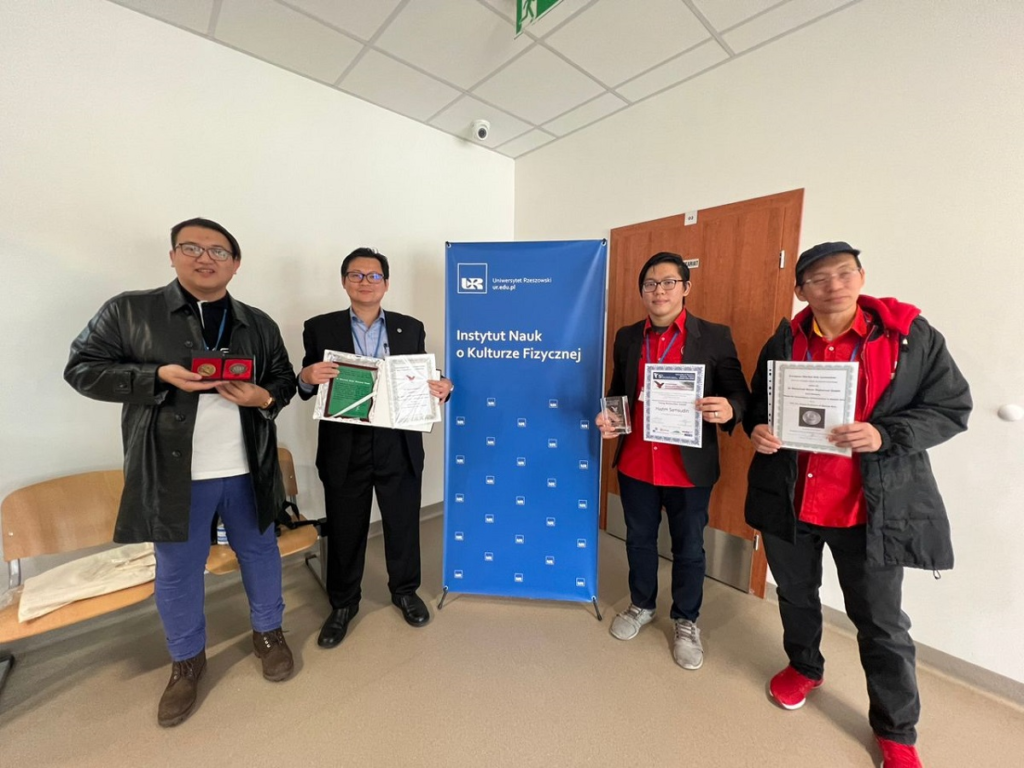
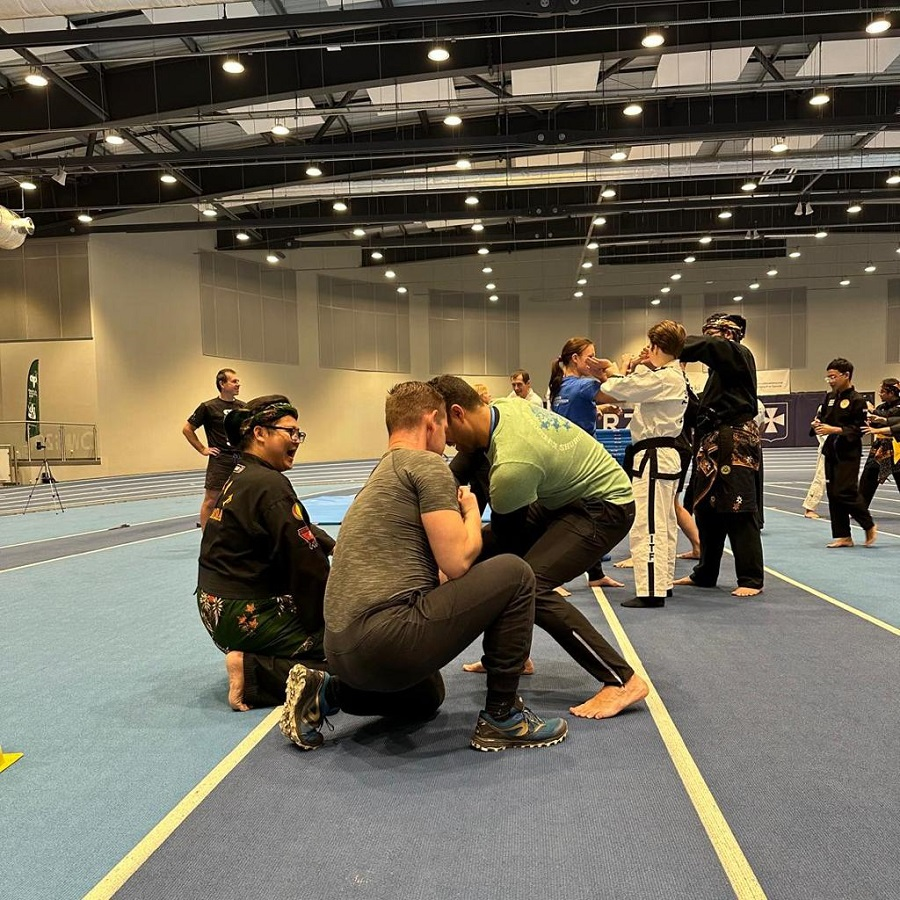
Moreover, Silat’s cross-border presence has inspired scholarly research and international collaboration. Conferences such as IMACSSS and ACPES have featured studies on Silat’s evolution, pedagogy, and global impact (Shapie et al., 2023). These platforms allow Silat practitioners and scholars to share insights, preserving the art while adapting it to contemporary contexts.
Silat across borders is more than a martial art—it is a cultural bridge. It reminds us that heritage can transcend geography and that the wisdom of the Malay warrior ethos continues to inspire unity and pride across Southeast Asia.
References:
Shapie, M.N.M., et al. (2024). Tradition to academia: The transformation of Silat education (2014–2024). UiTM Malaysia.
Anuar, A. W. (2002). Pendidikan dan Nilai-nilai Murni dalam Seni Silat. Kementerian Kebudayaan, Kesenian dan Warisan.
Anuar, A. W. (2008). Silat: The development history of traditional Malay silat. Hizi Print Sdn. Bhd.
Poon, E. (2021). Malaysia’s Silat recognised by UNESCO as an intangible art form. The Star
Shapie, M.N.M. (2021). The Warrior Attitude (Sikap Pendekar) in Malay Silat. UNESCO ICM.
Shapie, M.N.M., & Elias, M.S. (2016a). Silat: The curriculum of Seni Silat Malaysia. Revista de Artes Marciales Asiáticas, 11(2s), 122–125.
Shapie, M.N.M., et al. (2022). Manual Kejurulatihan Seni Silat Malaysia Tahap 1. Pertubuhan Seni Gayung Fatani Malaysia.
Shapie, M.N.M., et al. (2023). Silat Tempur – The First World Silat Combat Sports Competition for Children. Universiti Teknologi MARA.