1. Introduction: The Depth of Malay Martial Identity
Silat Melayu is more than a martial art—it is an embodied cultural system. Rooted in the Malay worldview of harmony, honour, and survival, it carries within it a multi-layered expression of warfare, ceremony, and spiritual preparation. From village courtyards to royal compounds, Silat has long served both as a tool for defence and a vehicle for identity. While modern sports formats often emphasize competition and scoring, traditional Silat Melayu operates across three distinct combat levels—each with its own philosophy, purpose, and mode of expression. This article explores these levels: ritual, training, and real combat, and how their interplay preserves the integrity of Silat Melayu as a living warrior tradition.
2. Ritual Combat: The Sacred Beginning
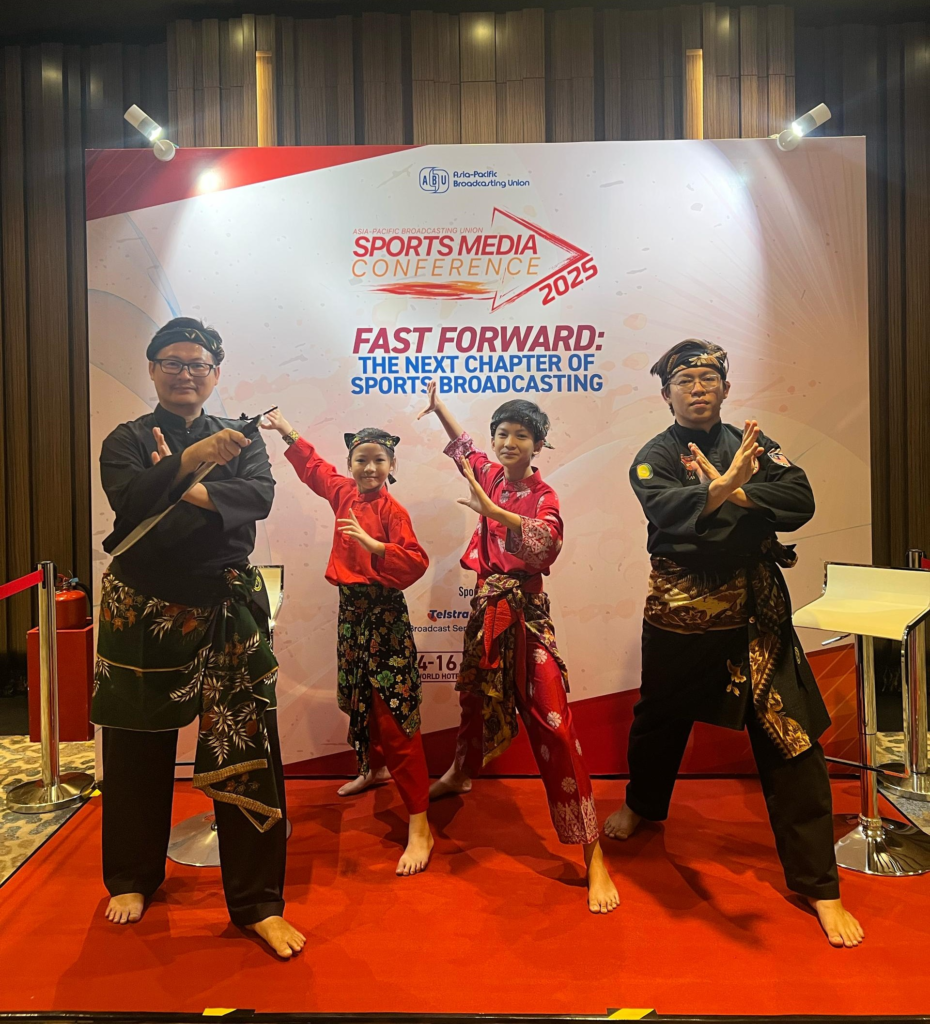
The first and most misunderstood level is ritual combat—represented through bunga, belebat, tapak, and symbolic gestures. Often performed in ceremonies, weddings, and public demonstrations, this ritual layer emphasizes beauty, control, and halus (refinement). But beneath its artistic expression lies a coded language of combat.
Movements like the circular limbai tangan, the measured steps of langkah, and the grounded strength of kuda-kuda rendah serve as metaphorical simulations of battle readiness. These are not mere performances; they are visual prayers, expressing intent and invoking lineage. Ritual combat in Silat prepares the heart before the fist—it refines instinct through discipline and embeds philosophical foundations such as respect (adat), humility (rendah diri), and vigilance (waspada).
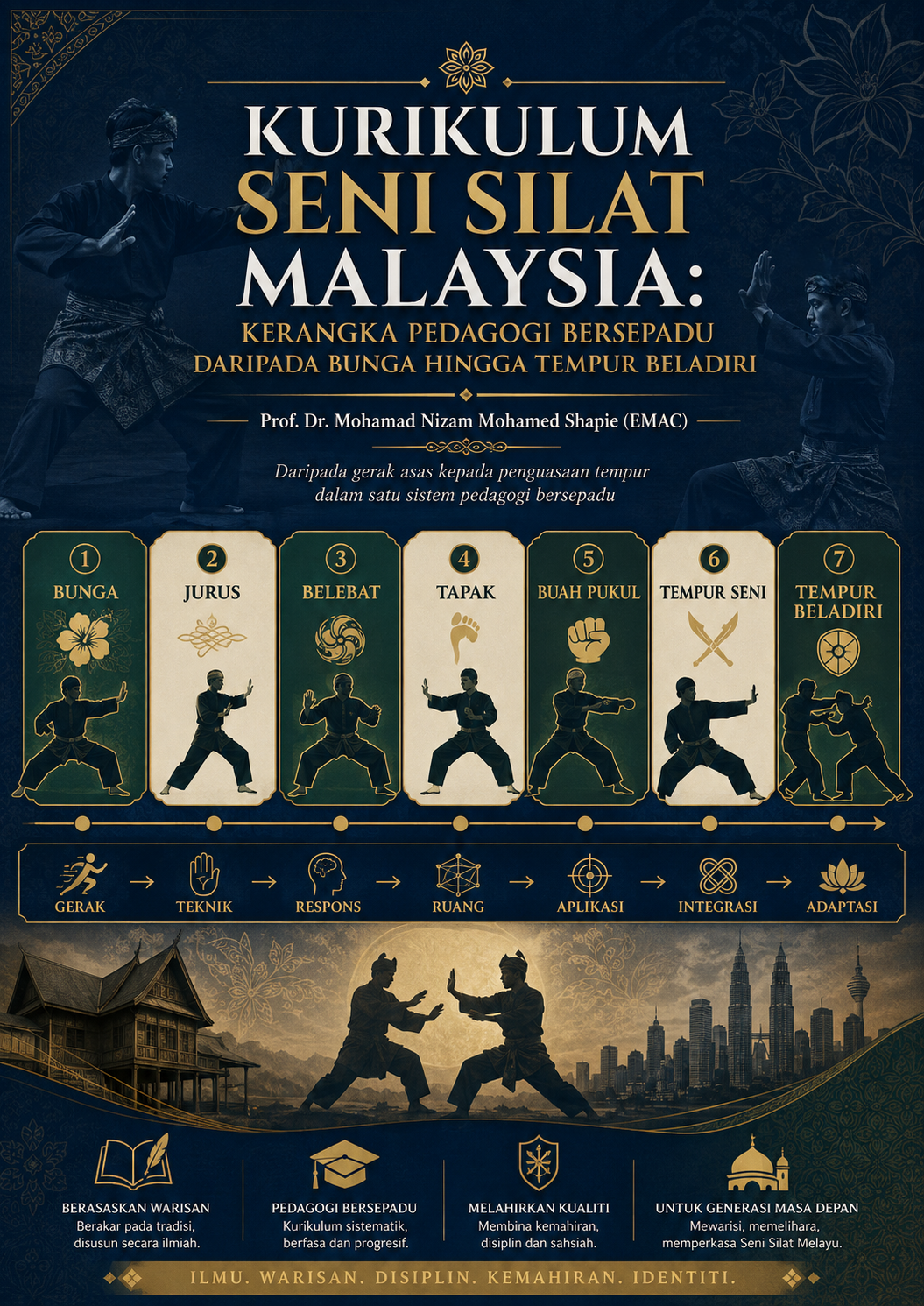
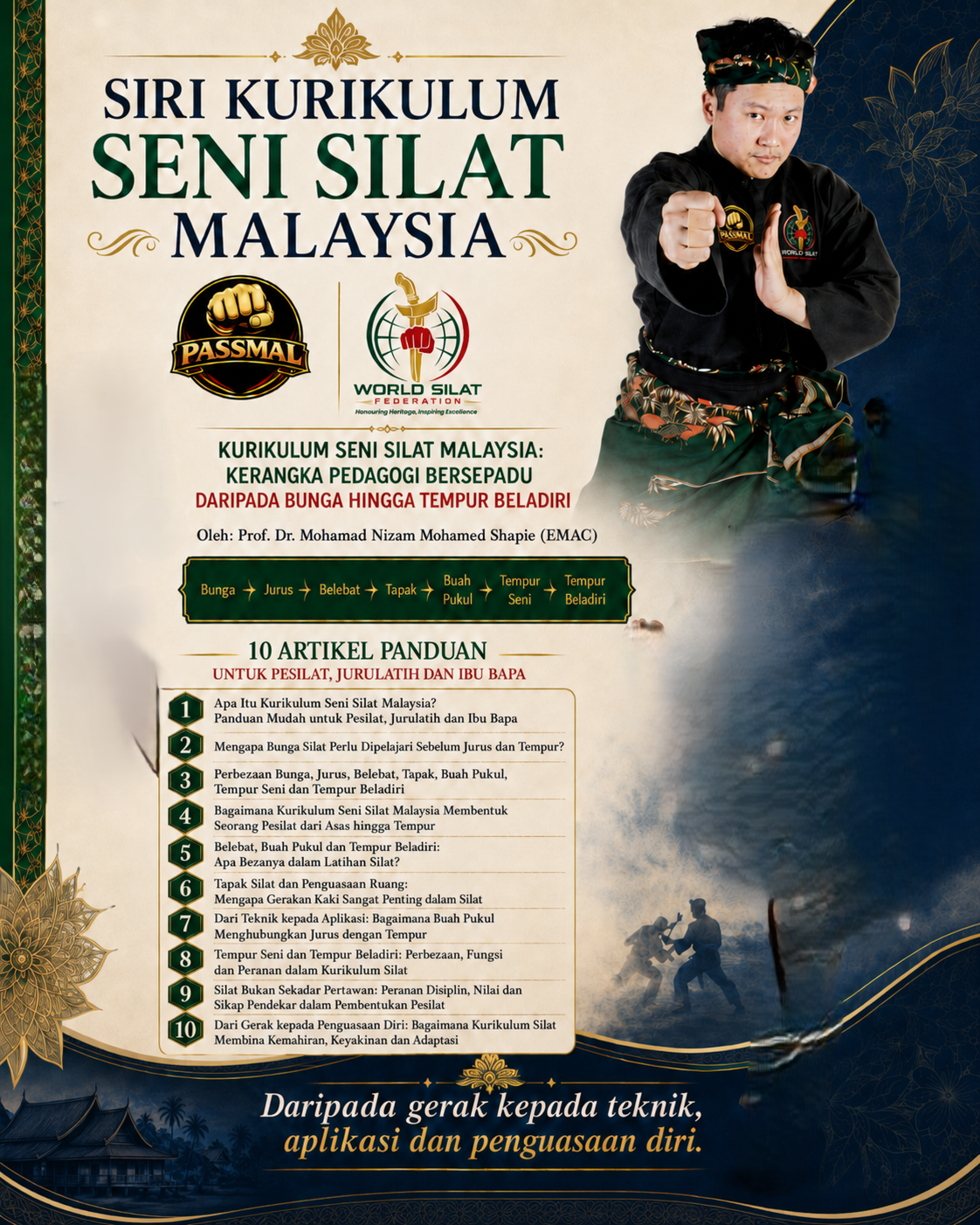
Through organizations like PASSMAL and programs developed at FSR UiTM, this layer is now systematized into early-stage curricula. The ritual phase sets the moral compass of the pesilat, instilling the idea that combat is not a sport of ego, but a sacred responsibility.
3. Technical Training: The School of Discipline
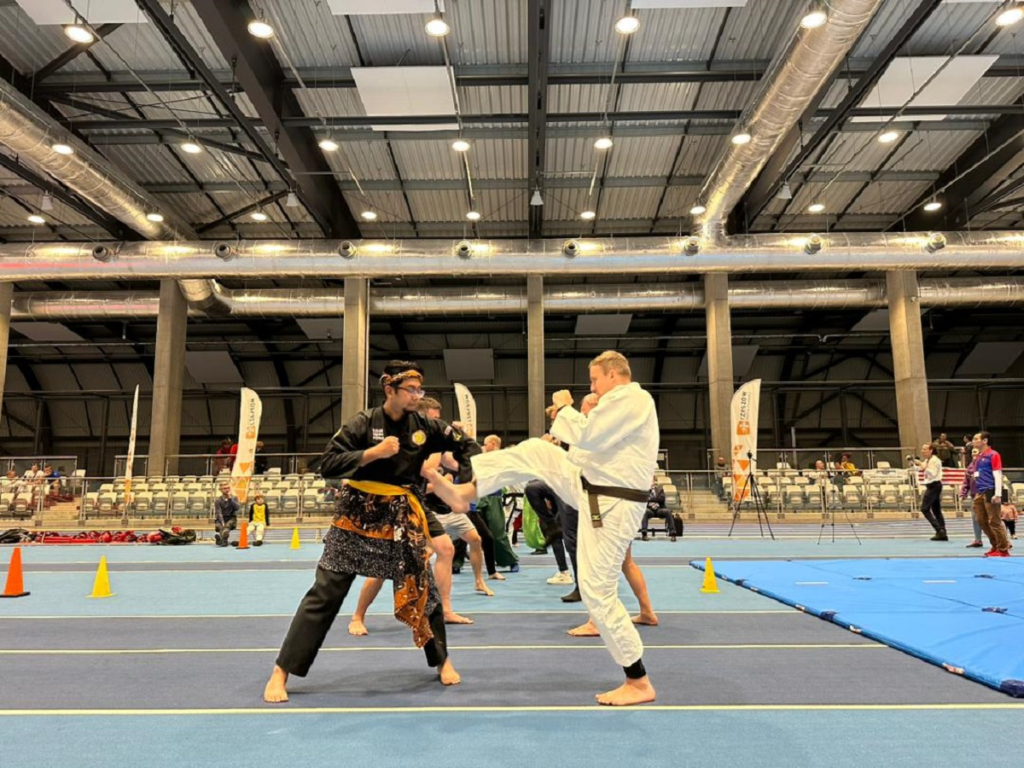
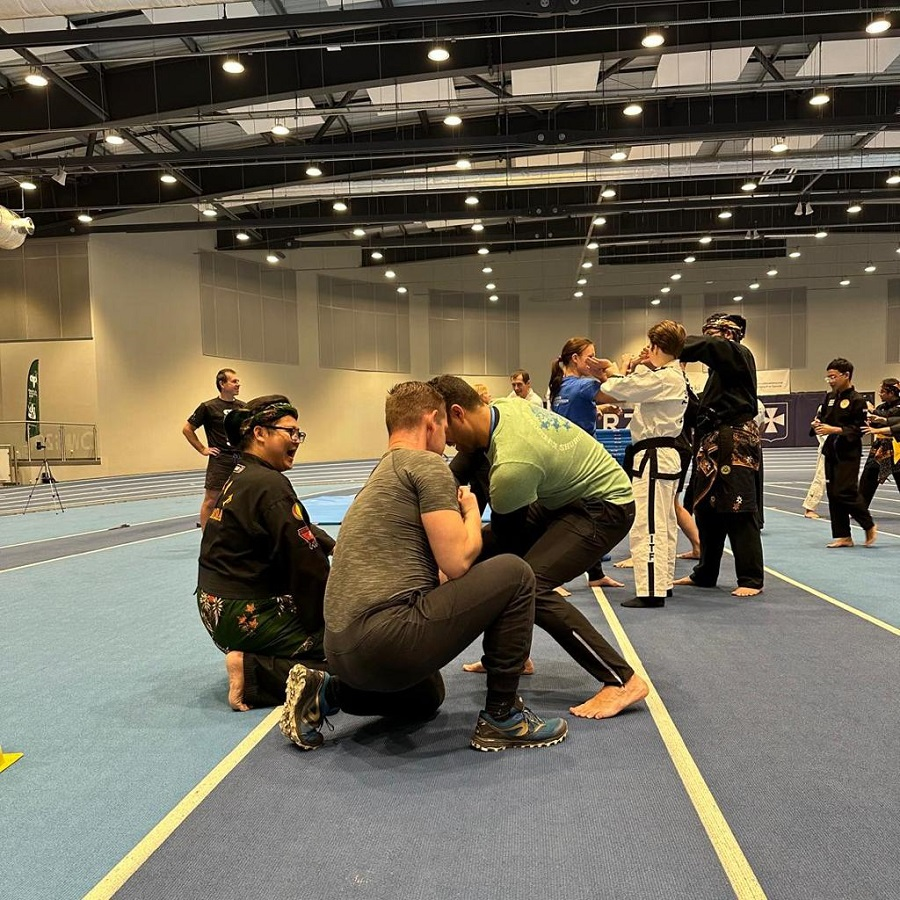
The second level is structured training combat—where the philosophy of the ritual phase is tested through technique, timing, and tactical application. At this stage, the pesilat trains in drills known as buah pukulan, elak, serong, and partner work that simulate real engagements. The aim here is not to win, but to master body mechanics, mental control, and situational awareness.
Movements like elak belakang (rear evasion) or pukulan lipat (folding strike) train the practitioner to think in layers—not just to respond, but to anticipate. Every training drill echoes real-world logic: avoid if you must, strike only when needed, and retreat with intelligence.
The pedagogical strength of Silat Melayu lies in its ability to teach through flow. While external martial arts may emphasize brute force, Silat relies on timing, rhythm, deception, and psychology. Training sessions become labs of cultural intelligence, where pesilat are conditioned to control aggression through precision, not provocation. This phase also introduces traditional weaponry such as the keris or tumbuk lada, though often in symbolic or simulated form.
Supported by the academic framework of UiTM’s AIRBORNE Research Group and PASSMAL’s structured assessments, this level ensures that every move is not only culturally accurate but biomechanically sound—blending traditional martial training with scientific rigour.
4. Real Combat: The Unscripted Encounter
The third and most critical level is real combat, where neither performance nor protocol dictates the flow. In this realm, the pesilat must rely on instincts trained through ritual and refined through repetition. Real combat is unpredictable and fast. Here, the elegance of bunga transforms into raw efficiency, and the calculated drills of buah become unconscious reflexes.
This level also revives the battlefield origins of Silat Melayu. In the past, Silat was designed for wartime ambushes, close-quarter combat, and jungle warfare. Grappling, trapping, off-balancing, and low-line attacks were central to its effectiveness. The tapak becomes not just a drill, but a mental map to dominate terrain. Belebat, once symbolic, becomes a functional pattern to neutralize sudden attacks.
The ethical compass, established in the first two levels, plays a crucial role here. Silat does not glorify violence. Rather, it promotes measured response, restraint, and honour in conflict. Real combat may be violent, but a true pendekar only engages when all other paths are exhausted.
In contemporary times, real combat scenarios are explored through Silat Tempur formats, close-contact sparring, and applied martial testing under supervision—blending tradition with contextual relevance. As emphasized in the research by Shapie and Samsudin (2021), such evolution ensures Silat Melayu remains functional in modern contexts without losing its cultural soul.
5. Conclusion: A Continuum of Purpose
The three levels of Silat Melayu combat—ritual, training, and real—are not separate paths but a continuous spectrum. Ritual grounds the spirit. Training sharpens the body. Real combat tests the will. Each layer reinforces the other, forming a complete warrior system rooted in Malay values, forged through centuries of conflict and diplomacy.
By preserving these three levels, PASSMAL and academic institutions like UiTM ensure that Silat Melayu is not reduced to spectacle or sport. It remains what it has always been—a disciplined way of life, a cultural archive, and a living embodiment of Malay resistance, wisdom, and honour.
📚 References (APA 7th Edition)
- Shapie, M.N.M., Elias, M.S., Anuar, A. (2016). Silat: The Heritage of Malaysia (Silat: Warisan Bangsa Malaysia). The National Department for Culture and Arts, Ministry of Tourism and Culture.
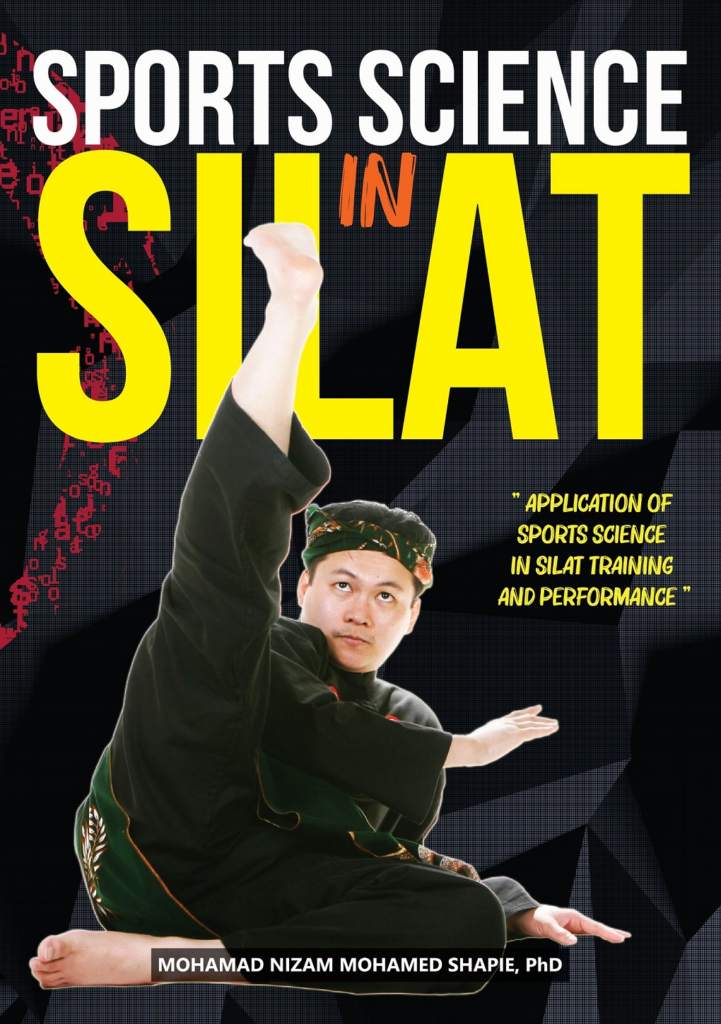
- Shapie, M.N.M. (2020). Sports Science in SILAT: Application of Sports Science in Silat Training and Performance. Pertubuhan Seni Gayung Fatani Malaysia.
- Samsudin, H., Shapie, M.N.M. (2021). Silat Tempur vs Silat Olahraga: Which Is the Best Combat Sport for Children? In 10th IMACSSS Conference Proceedings.
- Shapie, M.N.M. (2021). The Warrior Attitude (Sikap Pendekar) in Malay Silat Encouraging Malaysian Interest in Global Martial Arts and Combat Sports. UNESCO ICM.
- Shapie, M.N.M., Lee, K., Rahim, M.R.M., et al. (2022). Anuar Abdul Wahab (1945–2009): The Leadership and Contributions To The Establishment Of Traditional Art of War Into Modern Malay Silat. IMACSSS Proceedings.
- Parnabas, V.A., Abdullah, N.M., Shapie, M.N.M., et al. (2023). E-learning Motivation Among Student-athletes of Universiti Teknologi MARA (UiTM), Malaysia. Malaysian Journal of Sport Science and Recreation, 17(1), 20–34.
- Shapie, M.N.M., Nur, A.A.J., Kusrin, J., Wahidah, T., Elias, M.S. (2018). Activity Profile between Winners and Losers in International Silat Olahraga Matches. Journal of Physical Fitness, Medicine & Treatment in Sports, 2(4)